

Industrial Ovens for Aging Treatment
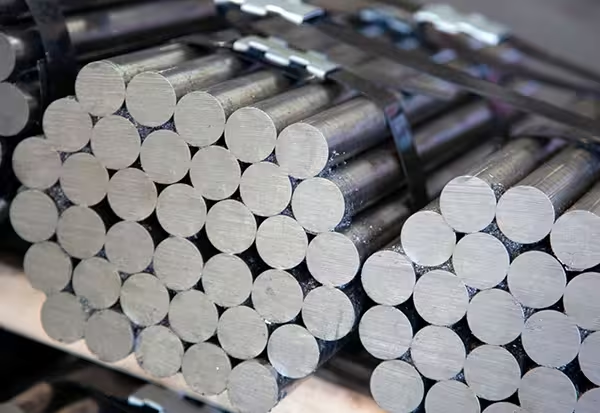
Aging treatment is a controlled thermal process used to increase strength, hardness, and dimensional stability in age-hardenable alloys after solution treatment or forming. It is widely used for aluminum castings, extrusions, forgings, machined parts, and lightweight structural components where repeatable mechanical properties, uniform heat exposure, and documented batch control are critical.
Why This Process Matters
Why Aging Treatment Requires Controlled Thermal Processing
Unlike general heating operations, aging treatment depends on holding parts within a defined temperature band for a precise amount of time. The oven must provide stable circulation, repeatable load-to-load exposure, and dependable control logic so strengthening develops evenly across the batch without under-aging, over-aging, or unnecessary distortion.
Stable Hold at the Aging Setpoint
Precise soak control helps parts reach the intended strength and hardness target without drifting outside the required temper window.
Uniform Airflow Across the Load
Balanced recirculation reduces hot and cold zones that can create inconsistent mechanical properties from one part or one rack position to another.
Dimensional Stability for Finished Parts
Controlled ramping and repeatable heat distribution help protect machined tolerances, fixture geometry, and final part quality.
Documented Cycles for QA and Validation
Recipe control, alarms, and batch records support customer specifications, internal process control, and qualification work.
Typical Applications
Where Aging Treatment Is Commonly Used
Aging treatment is commonly applied where alloys must develop final mechanical properties after prior thermal or forming steps. It is especially important in production environments that require repeatable strength, low distortion, and dependable batch control.
Aluminum Extrusions and Profiles
Used in T5 and T6-type production routes to develop final strength after controlled cooling or solution treatment.
Castings and Structural Components
Applied to aluminum castings and structural parts that require improved hardness, tensile performance, and stable final properties.
Forged and Machined Parts
Supports final property development in parts where consistency after machining, fixturing, or downstream assembly matters.
Aerospace Brackets and Fittings
Chosen where temperature consistency, batch traceability, and repeatable strengthening results are essential.
EV Battery Trays and Lightweight Assemblies
Common in lightweight alloy structures that must balance strength, weight reduction, and production efficiency.
Precision Metal Components
Used when parts need controlled strengthening without the softer condition typically associated with annealing.
Selection Guidance
How to Match the Right Oven Direction to Aging Treatment
Different aging-treatment workloads call for different oven directions. The right choice depends on part size, loading method, throughput, temperature uniformity expectations, and how the aging step fits into the broader production route.
| Process Need | Typical Requirement | Recommended Oven Direction |
|---|---|---|
| Aluminum parts requiring repeatable artificial aging | Stable low-to-mid temperature hold, good uniformity, batch recipe control | Aging Oven |
| Mixed product sizes and moderate batch production | Flexible loading, reliable circulation, easy process adjustment | Industrial Batch Oven |
| Oversized frames, racks, or wheeled loads | Large chamber access, cart loading, reduced handling risk | Truck-In Oven |
| Large-volume batches or multi-cart production | Walk-in access, broader chamber layout, operator convenience | Walk-In Oven |
| Dense castings or heavy fixtures | Reinforced floor, strong airflow, stable recovery after door opening | Heavy-Duty Oven |
| Standardized parts with high daily output | Continuous flow, reduced manual handling, takt-time alignment | Industrial Conveyor Oven |
| Qualification-driven aerospace or spec-controlled batches | Tight control logic, data logging, mapped temperature performance | Aging Oven Industrial Batch Oven |
| Lightweight structural alloy parts with distortion concerns | Controlled airflow, repeatable heating exposure, careful loading method | Aging Oven Truck-In Oven |
EQUIPMENT DIRECTION
Recommended ZonHoo Oven Solutions for Aging Treatment
Aging treatment requirements vary by alloy family, batch size, part geometry, and production rhythm. The oven direction below helps align your process with the right chamber format, loading method, and control approach.
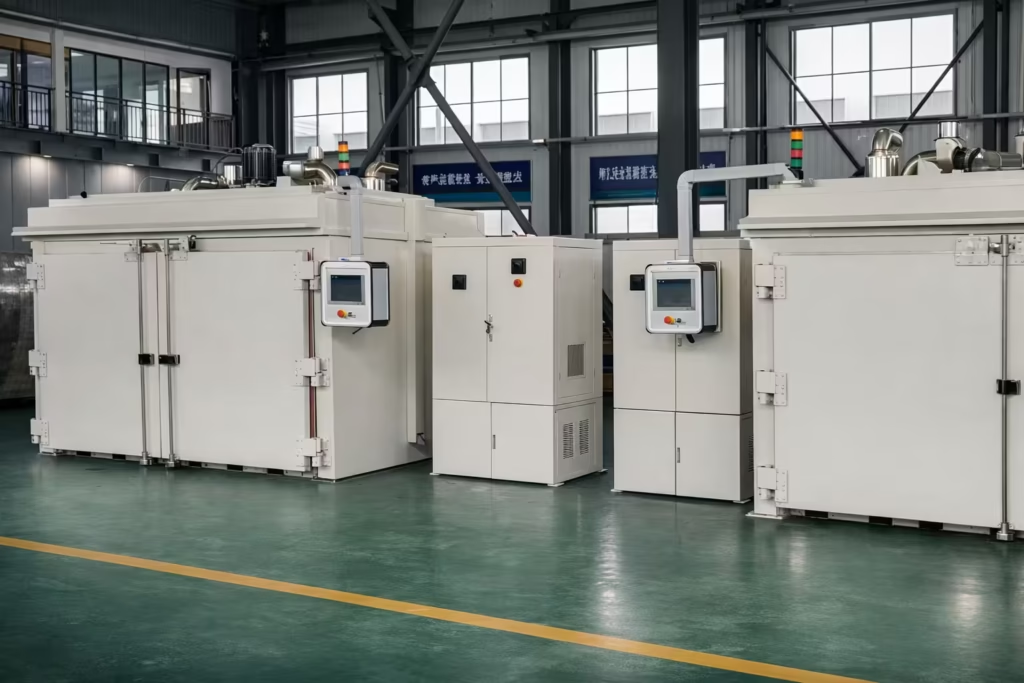
Aging Oven
A purpose-built choice for artificial aging and age-hardening cycles. Best suited to aluminum alloys and other precipitation-strengthening processes that require stable soak temperatures, repeatable batch control, and dependable part-to-part consistency.
Best for:aluminum aging, T5/T6/T7 routes, repeatable batch processing
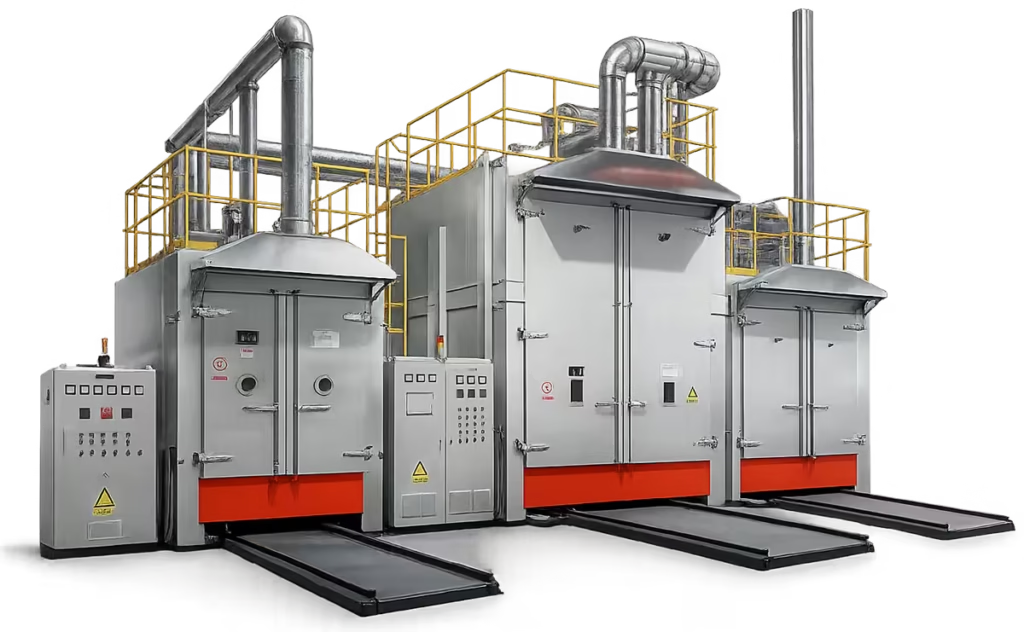
Industrial Batch Oven
A flexible solution for mixed part sizes, development work, and general production aging. It is a strong fit when several part families share one oven platform and process settings need to be adjusted by recipe.
Best for:mixed workloads, flexible production, multi-product aging
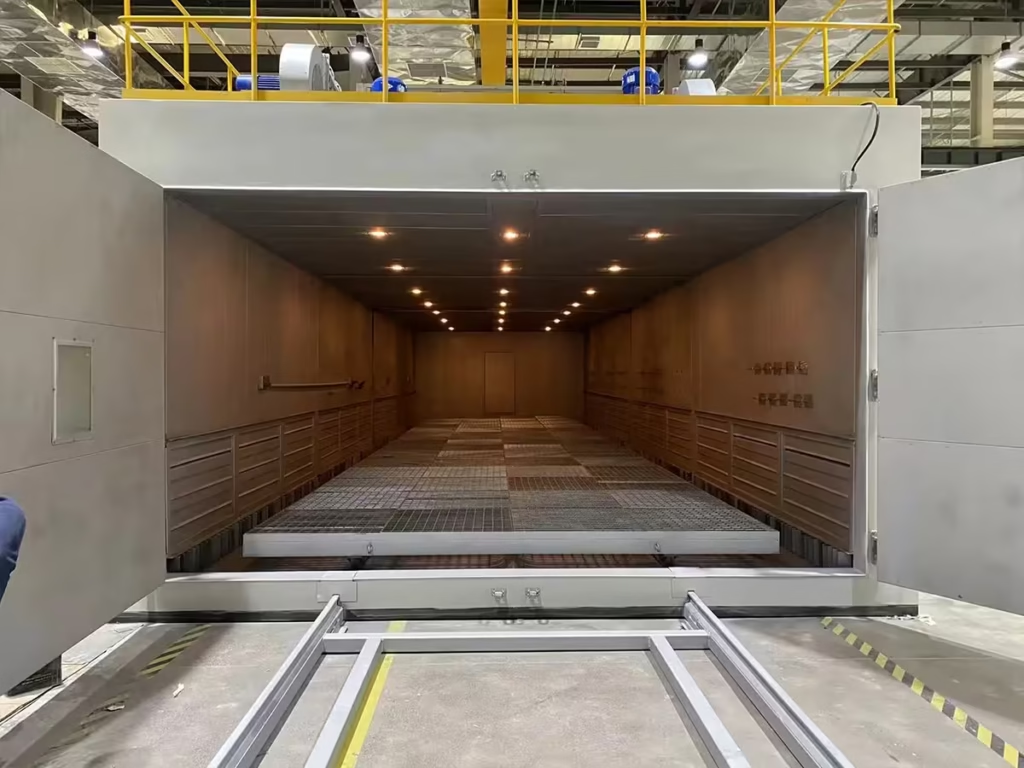
Truck-In Oven
Designed for oversized fixtures, heavy loads, and wheeled carts. It reduces loading difficulty and supports large parts that cannot be handled efficiently in smaller chamber formats.
Best for:large frames, heavy racks, structural components
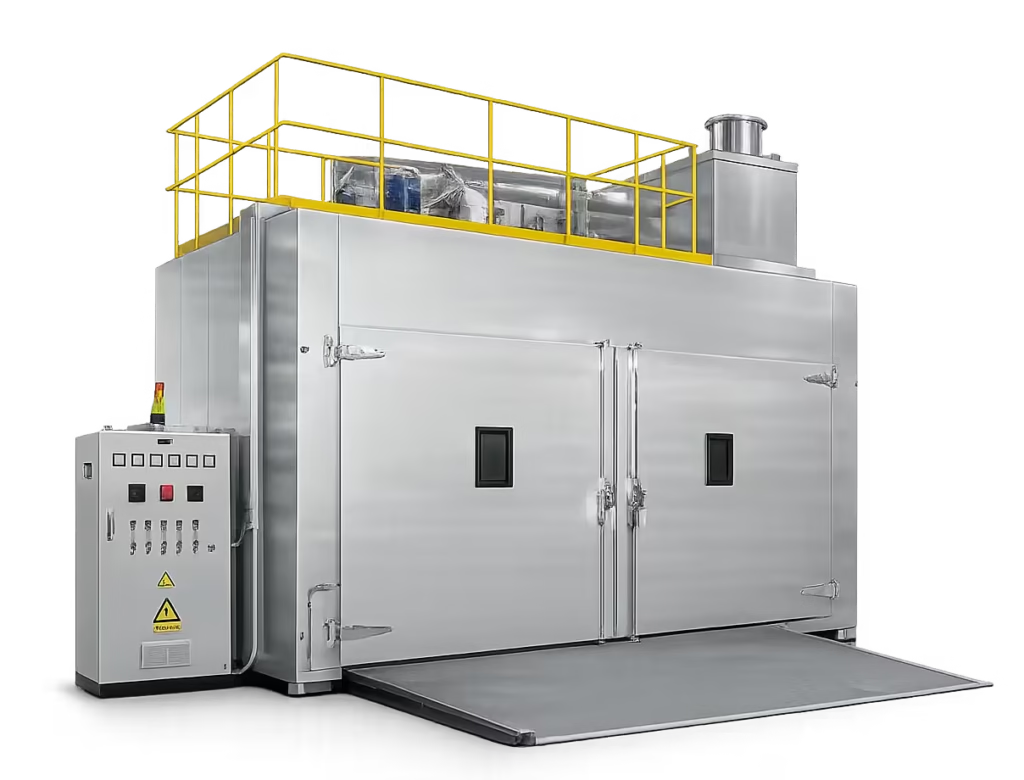
Walk-In Oven
Suitable for large-volume aging batches, multi-cart loads, or parts that need operator walk-in access. This direction works well when chamber space and internal loading flexibility matter more than compact footprint.
Best for:large batch capacity, multi-cart loading, spacious access
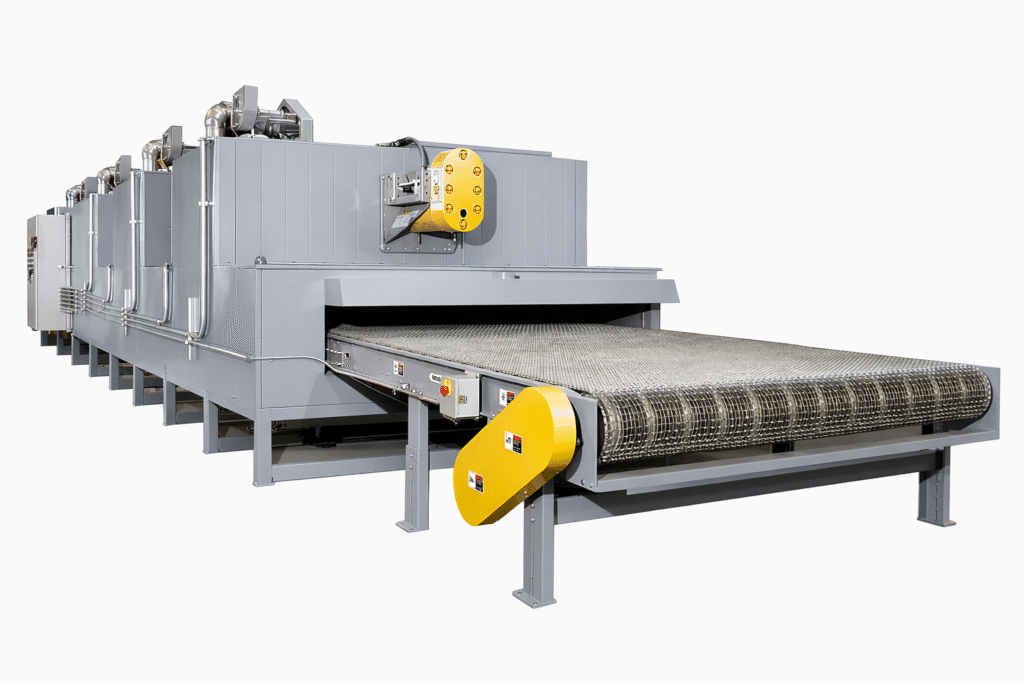
Industrial Conveyor Oven
Ideal for standardized parts and repeat production where throughput, takt time, and labor efficiency are priorities. It supports a more continuous aging workflow when the upstream and downstream process can be linked.
Best for:high-volume production, continuous flow, stable takt-based output
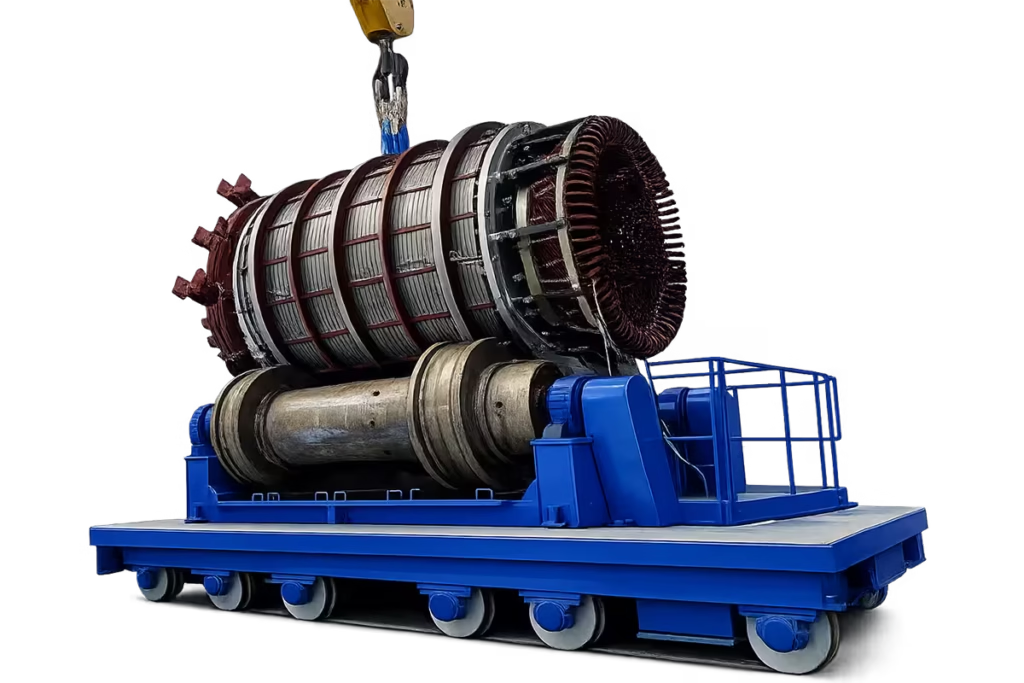
Heavy-Duty Oven
Built for dense loads and structurally demanding applications. Recommended when castings, fixtures, or heavy parts require reinforced support and steady airflow performance across the full chamber.
Best for:castings, dense metal loads, reinforced floor support
Support Before RFQ
Process Validation and Engineering Support
If your aging-treatment process must meet hardness targets, temper requirements, or customer heat-treatment specifications, process validation should be considered early. We help define the thermal window, loading approach, control package, and documentation scope before fabrication so the final oven matches the real production task.
- Review alloy family, part type, and target temper route
- Confirm working temperature range and soak-time requirement
- Define fixture, rack, basket, cart, or conveyor loading method
- Evaluate batch size, throughput, and chamber utilization
- Configure recipe control, alarms, and data logging functions
- Support FAT discussion, acceptance criteria, and engineering review
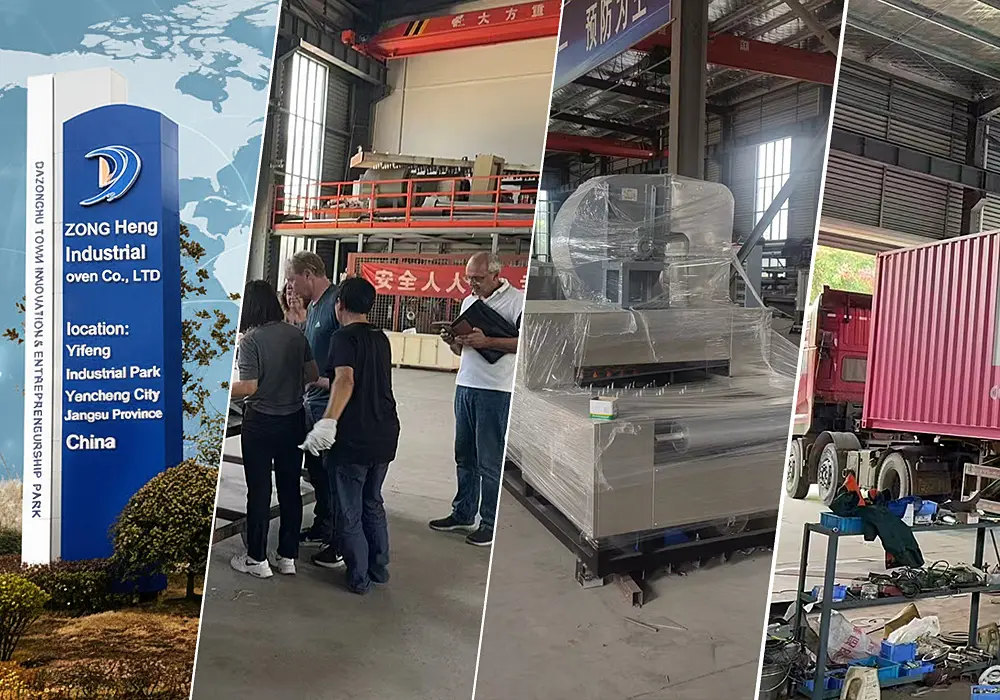
Test Your Process on Available Equipment
Frequently Asked Questions
Frequently Asked Questions About Aging Treatment
What is aging treatment in industrial heat processing?
Aging treatment is a controlled heating process used to develop final mechanical properties in age-hardenable alloys. It is commonly applied after solution treatment or forming so the material can reach the required strength, hardness, and dimensional stability.
How is aging treatment different from annealing?
Annealing is generally used to soften material, reduce internal stress, or improve formability and machinability. Aging treatment does the opposite in many cases: it is used to strengthen the material through controlled precipitation or age hardening.
What temperature range is common for aluminum aging treatment?
Many aluminum aging cycles operate in a relatively low temperature band compared with annealing, often around 120–220°C. The actual setting depends on alloy grade, temper target, part geometry, and customer specification.
When should I choose a batch oven instead of a conveyor oven for aging treatment?
A batch oven is usually better when part sizes vary, process recipes change often, or traceable load-by-load control is important. A conveyor oven is more suitable when part geometry is standardized and the production line requires continuous, takt-based flow.
Can ZonHoo support validation and documented control for aging-treatment processes?
Yes. ZonHoo can help define chamber direction, airflow logic, control functions, and data-recording options based on your process goals. For validation-driven projects, we can also discuss mapping expectations, acceptance criteria, and engineering documentation scope.
Tell Us About Your Aging Treatment Process
Tell us your alloy type, part size, batch arrangement, target temperature range, soak time, and production volume. We will help you review suitable oven directions, loading methods, and control options for your aging-treatment process.
What to Prepar
- Alloy family or part material
- Part size, single-load weight, and loading method
- Target temperature range and soak time
- Daily or shift-based throughput target
- Any current issues such as uneven hardness, distortion, or bottlenecks
What We Can Discuss
- Recommended oven direction and chamber size
- Airflow and loading logic for consistent aging results
- Controls, alarms, and data-logging options
- Utility, footprint, lead time, and engineering support scope