If your coating looks good but the cure is not right, you pay for it later in claims, rework and scrap. ZonHoo industrial curing ovens are built to help you nail cure quality, line speed and repeatability at the same time. We design each oven around your coating system, part geometry and fixtures, instead of forcing your process into a generic box.
Typical cure ranges: 120–350 °C ·
Batch and trolley type ·
EX-proof options ·
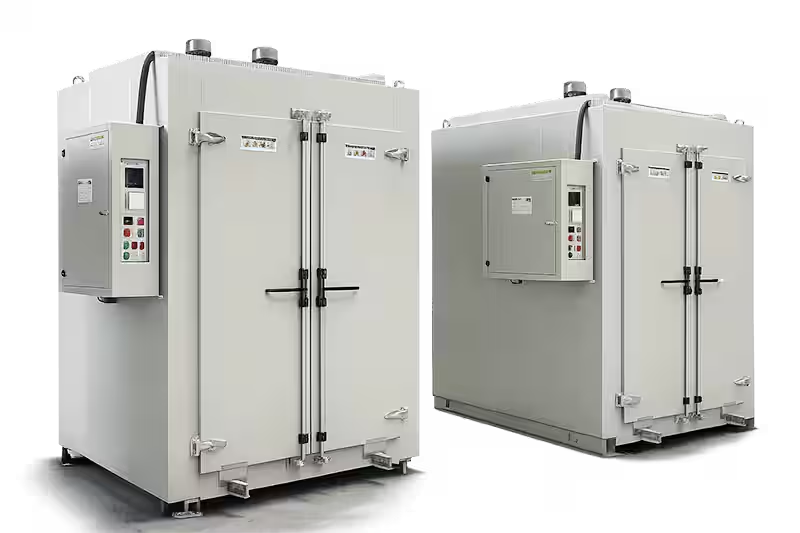
An industrial curing oven is a heated chamber designed to bring your coating, paint, adhesive or resin through a specific time–temperature profile. Unlike a simple drying oven, a curing oven focuses on the chemical reaction inside the film or resin – crosslinking, polymerization or hardening – so that your parts reach the specified hardness, adhesion and chemical resistance.
ZonHoo curing ovens are tuned for stable temperature, controlled airflow and repeatable loading patterns, so your operators can hit the same cure window shift after shift, not just “get the parts hot”.
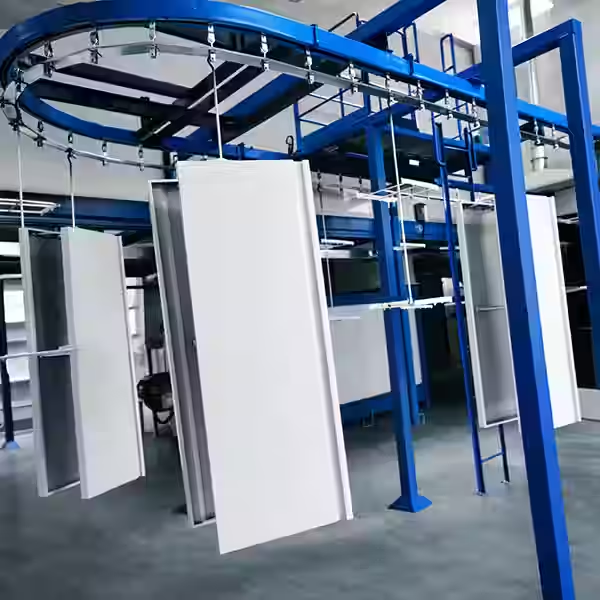
Batch and trolley-type curing ovens designed for powder lines. Fast heat-up, strong recirculation and exhaust control help you cure heavy racks and dense hang patterns without hot spots or undercure.
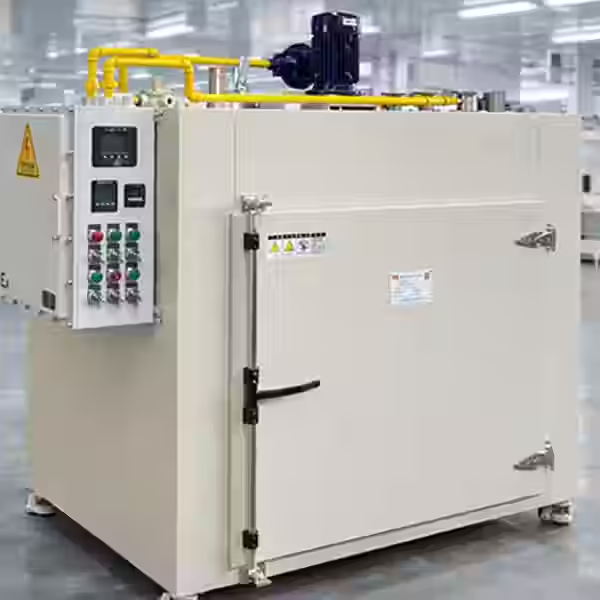
General-purpose convection curing ovens for paints, varnishes, resins and more. Balanced forced-air circulation gives you stable temperature and good cure uniformity for mixed product families.
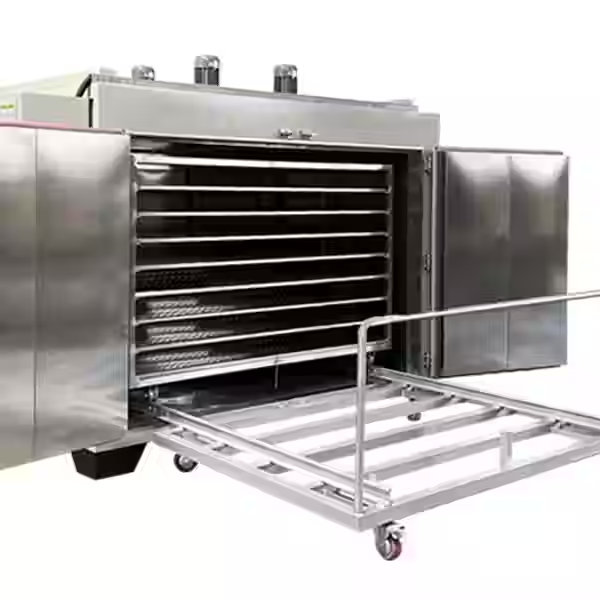
Flexible batch curing ovens when you run many product types, small and medium volumes, or need clean changeovers. Ideal for job shops and multiproduct plants.
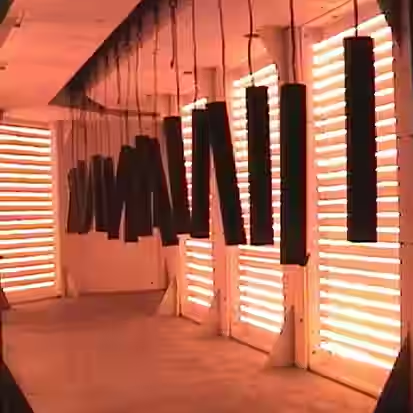
IR curing ovens for fast surface cure, thin films and space-limited lines. Can be used as a stand-alone oven or combined with convection zones.
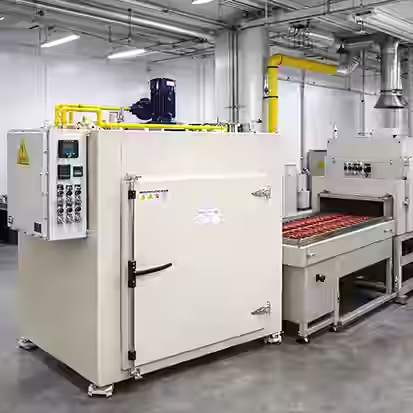
Explosion-proof curing ovens for solvent-based coatings or flammable vapors. Designed for EX-rated components, purge and ventilation to reduce risk on your finishing line.
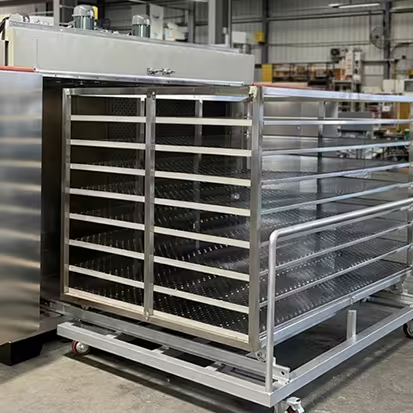
Floor-level trolley and truck-in curing ovens for large, heavy or tall workpieces. Operators build a complete load outside the chamber and roll it in safely.
| Model family | Temperature range (°C) | Best for | Typical industries |
|---|---|---|---|
| Powder Coating Curing Oven | 160–220 | Powder coatings on steel and aluminum parts | Metal fabrications, machinery, general industrial finishing |
| Forced Convection Curing Oven | 80–250 | Wet paints, enamels, varnishes, general resins | Equipment manufacturers, appliance, metalworking |
| Batch Curing Oven | 80–350 | Mixed coatings, many product types, small/medium batches | Job shops, contract coaters, maintenance shops |
| Infrared Radiation Curing Oven | 120–260 | Thin films, fast surface cure, space-limited lines | High-speed lines, small parts, retrofit projects |
| Trolley Type Curing Oven | 120–350 | Large and heavy coated assemblies on floor-level trolleys | Large weldments, frames, construction and agricultural equipment |
| High-Temp EX Oven | 120–450 | Solvent-based paints and coatings in hazardous areas | Chemical plants, oil & gas, hazardous-area finishing lines |
All dimensions, power ratings and loading capacities shown are typical reference data. ZonHoo industrial ovens are highly customized systems – final usable workspace, external dimensions and connected load will be defined in your project-specific proposal.
Values shown are typical only; ZonHoo will define final size, capacity and power in your custom proposal.
If you are still comparing oven types for curing, drying, preheating, or heat treatment, read our Industrial Oven Selection Guide to match the oven structure, heating method, airflow, and loading style to your process.
ZonHoo curing ovens are used anywhere a coating or resin must reach a specified cure, not just “dry to touch”. Typical applications include:
– Powder coating cure for metal parts and fabrications
– Wet paint and enamel curing for industrial equipment
– Epoxy adhesive and structural adhesive curing
– Composite resin curing and post-curing
– Varnish curing for electric motors and transformers
– Rubber and elastomer curing
– Sealant and potting compound curing
– Coil coating and small parts finishing
– Laboratory and small-batch qualification curing
ZonHoo industrial curing ovens are sized around your parts, fixtures and throughput target – not just a catalog size.
For large curing parts, racks, carts, or floor-loaded products, our Industrial Walk-In Oven Selection Guide explains how chamber size, door design, loading clearance, airflow, and safety features should be confirmed before ordering.
– Typical operating range: 120–350 °C (248–662 °F)
– Higher-temperature options for special resins and composites
– Usable volumes from small lab-size chambers to large trolley ovens for long weldments or frames
– Loading styles: shelf/rack, cart-in, trolley or custom fixtures
– Electric, indirect gas or hybrid heating packages available
Cure quality depends on the air that actually reaches your parts, not on an empty-chamber test. ZonHoo designs airflow patterns around your racks, trolleys and fixtures:
– Combination or directional airflow tuned to your hang patterns and part geometry
– Uniformity mapping at defined load conditions, not only “clean” tests
– Fast heat-up and door-open recovery to protect cure quality during busy shifts
– Optional circulation zones to handle different coating thickness or mass in one load
If you need documented temperature uniformity for audits, ZonHoo can provide mapped reports and help you define your acceptance criteria.
For custom walk-in curing oven projects, review our Custom Industrial Walk-In Ovens RFQ Guide before finalizing part size, loading method, airflow layout, safety features, and utility requirements.
A drying oven mainly removes moisture or solvent from the surface. A curing oven is designed to complete a chemical reaction inside the coating or resin, such as crosslinking or hardening. Many lines need both a flash-off or drying stage and a curing stage.
Most standard powder coatings cure in the range of 160–200 °C, with a defined time at metal temperature. The exact curve depends on your powder supplier. ZonHoo can help you match your oven design to that curve.
Yes, as long as you design the loading pattern, airflow and recipes correctly. Batch curing ovens and trolley-type ovens are flexible choices for multiproduct plants.
Besides visual inspection, most customers use hardness, solvent rub, adhesion tests or other methods specified by their coating supplier. Stable oven temperature and repeatable loading are the foundation.
ZonHoo is a vertically integrated manufacturer, not just a trader. That matters for curing ovens because your process is unique:
–Engineering team focused on coating and curing processes
– Real-world experience with powder, paint, epoxy, composites and more
– Heavy-duty welded frames, industrial components and robust insulation
– Factory testing and quality checks before shipment
– Long-term support for maintenance, spare parts and upgrades
Need help? See Maintenance & Parts or Commitment-To-Safety.
Tell us about your curing process and we’ll design the right industrial curing oven for your line.
Need Your Equipment Fast? Contact Our Engineer Now!
The faster you contact us, the faster your equipment is delivered. Don’t wait—act now!

After the form is submitted, a thank-you page will pop up.