

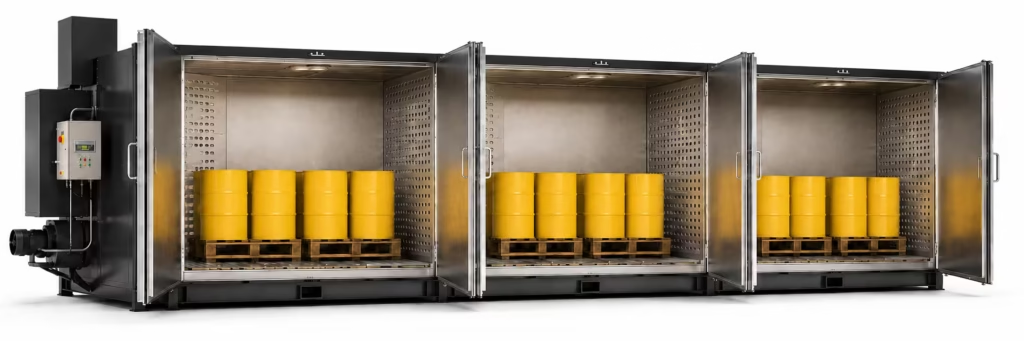
Explosion-Proof Thermal Oil Oven for Hazardous Material Processing
ZonHoo designs indirect thermal-oil explosion-proof ovens for hazardous materials, solvent-related processes, energetic materials, and defense-sensitive applications. By separating the primary heat source from the process chamber, the system helps reduce direct ignition-source exposure while integrating ventilation, purge logic, interlocks, optional LEL monitoring, and rated electrical packages where required.
Heating Method
Indirect thermal-oil heating with external heater, oil pump, insulated piping, and heat exchanger.
Core Safety Logic
Heat-source separation, purge logic, exhaust control, fan/heater interlocks, and optional LEL monitoring.
Applications
Hazardous materials, solvent-related heating, chemical drums, IBCs, and outdoor chemical storage hot boxes.
Custom Package
Chamber size, loading method, weatherproofing, rated electrical package, FAT, and documentation support.
Product Definition
What Is an Explosion-Proof Thermal Oil Oven?
An explosion-proof thermal oil oven is a custom heating chamber for hazardous materials, chemical drums, IBC containers, solvent-related products, and temperature-sensitive materials that cannot be treated as ordinary batch heating. It is often used for winter chemical storage, freeze protection, controlled warming, low-temperature holding, drum heating, IBC heating, and safety-focused material processing.
Instead of placing exposed electric heating elements in or near the material-processing space, the system uses an external thermal-oil heating unit, oil circulation pump, insulated piping, and a heat exchanger. Heat is transferred indirectly into the oven airflow, so the main heat source can be arranged away from the hazardous chamber according to the project layout.
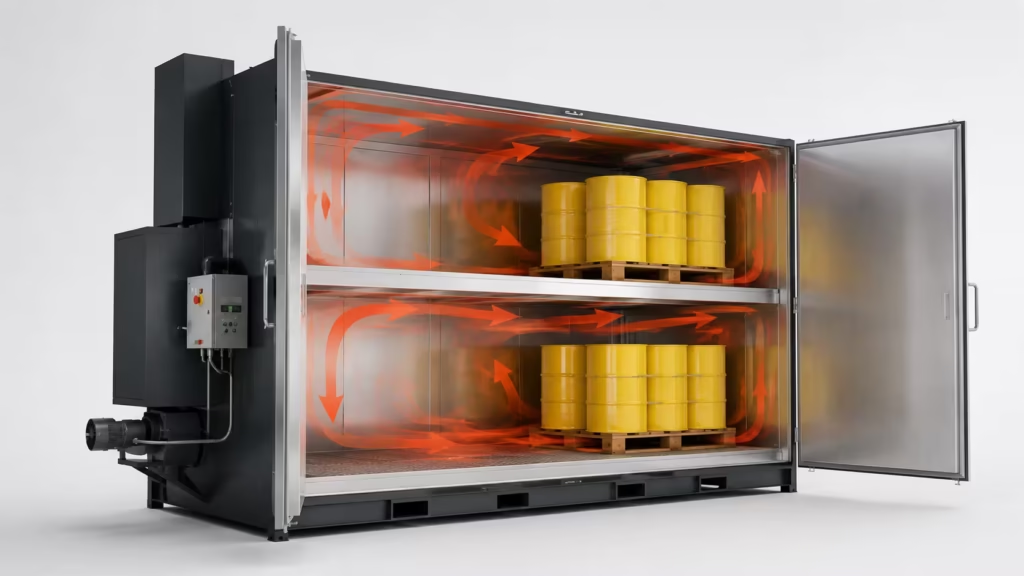
This design is selected when the customer needs more than simple temperature control. Typical projects may involve chemical containers that must be kept warm in cold weather, viscous liquids that need controlled heating before use, solvent-containing materials that require vapor-risk review, or hazardous goods that need a more conservative separation between the heat source and the storage or processing area. For general chamber sizing, loading method, and custom thermal process planning, see our custom industrial oven engineering support
Why the Heating Architecture Matters
Why Direct Electric Heating May Not Be Enough for Hazardous Materials
Standard industrial ovens often use direct electric heating elements to heat circulating air. This is practical for ordinary drying, curing, preheating, and batch heating. However, when the process involves volatile solvents, hazardous powders, energetic materials, sensitive chemicals, or flammable vapor risk, the customer is no longer buying only temperature performance.
The real questions become: where is the ignition source, can vapor accumulate, does heating start only after purge, are fans and heaters interlocked, does the site require rated components, and is LEL monitoring needed?
For the engineering background behind these decisions, read our solvent processing safety and explosion protection guide
ZonHoo Signature Engineered Option
Indirect Thermal-Oil Heated Oven Architecture
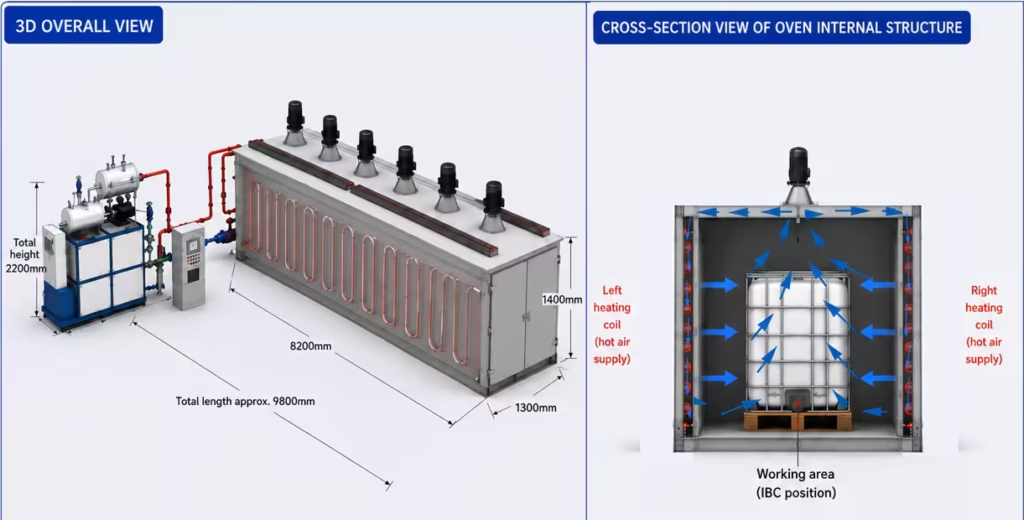
The key difference is not only the use of explosion-proof electrical components. ZonHoo can redesign the heating architecture itself. The main heating source is separated from the hazardous processing chamber, and heat is transferred through a thermal oil circulation loop and heat exchanger.
→
→
→
→
→
→
Core design logic: The process chamber does not rely on exposed electric heating elements for direct heating. Heated thermal oil transfers energy to the oven airflow through a heat exchanger, helping reduce direct ignition-source exposure inside or near the material-processing space.
Safety Layers
How Explosion Protection Is Achieved
Explosion protection is not a single component. It is a layered system combining heating architecture, ventilation, purge logic, monitoring, interlocks, rated electrical design, and project-specific safety review.
Separates the primary heat source from the hazardous processing chamber to reduce direct ignition-source exposure.
Transfers heat through thermal oil circulation and a heat exchanger rather than direct exposed heaters.
Heating is enabled only after a defined purge cycle and airflow confirmation where required.
Fresh air and exhaust are reviewed to help control vapor accumulation during operation.
05
Heating is disabled if circulation or exhaust airflow conditions are abnormal.
06
LEL sensors can trigger alarm, ventilation response, or heating shutdown when required.
07
Uses rated wiring, motors, junction boxes, grounding, and XP / ATEX-related packages where required.
08
FAT, safety logic descriptions, third-party review coordination, and project-specific records can be prepared.
Thermal Oil Safety
Thermal Oil System Safety Controls
A thermal oil system also requires its own safety logic. ZonHoo reviews both the oven chamber and the oil circulation system so the heating architecture is controlled, monitored, and maintainable.
- Oil temperature protection and independent high-limit control
- Oil flow monitoring and oil pump failure protection
- Low oil level protection and expansion tank design
- Pipeline insulation and guarded hot surfaces where required
- Leakage containment or drain strategy where required
- Emergency shutdown and alarm logic
- Chamber over-temperature protection separated from oil temperature control
Applications
Where Explosion-Proof Thermal Oil Ovens Are Used
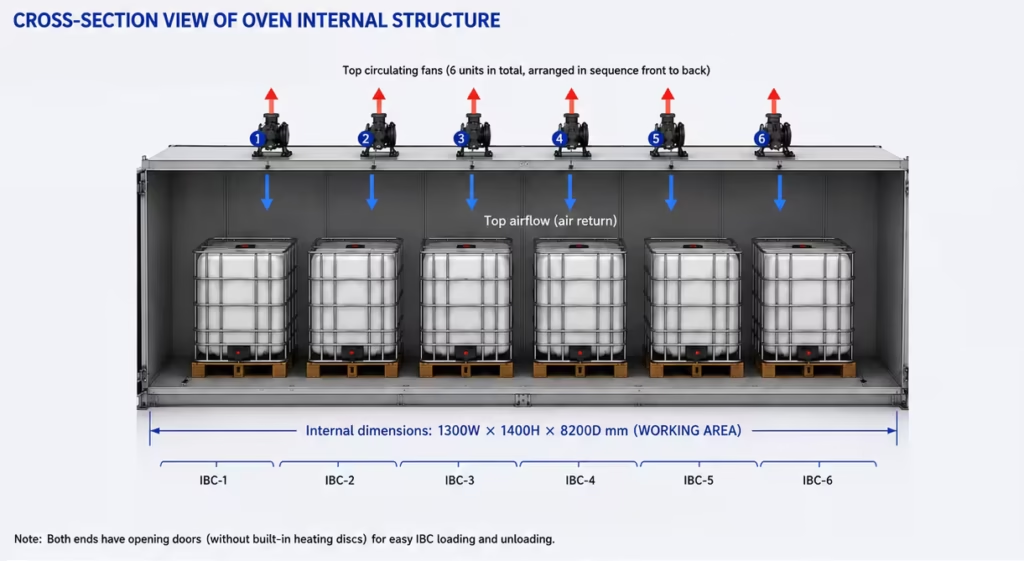
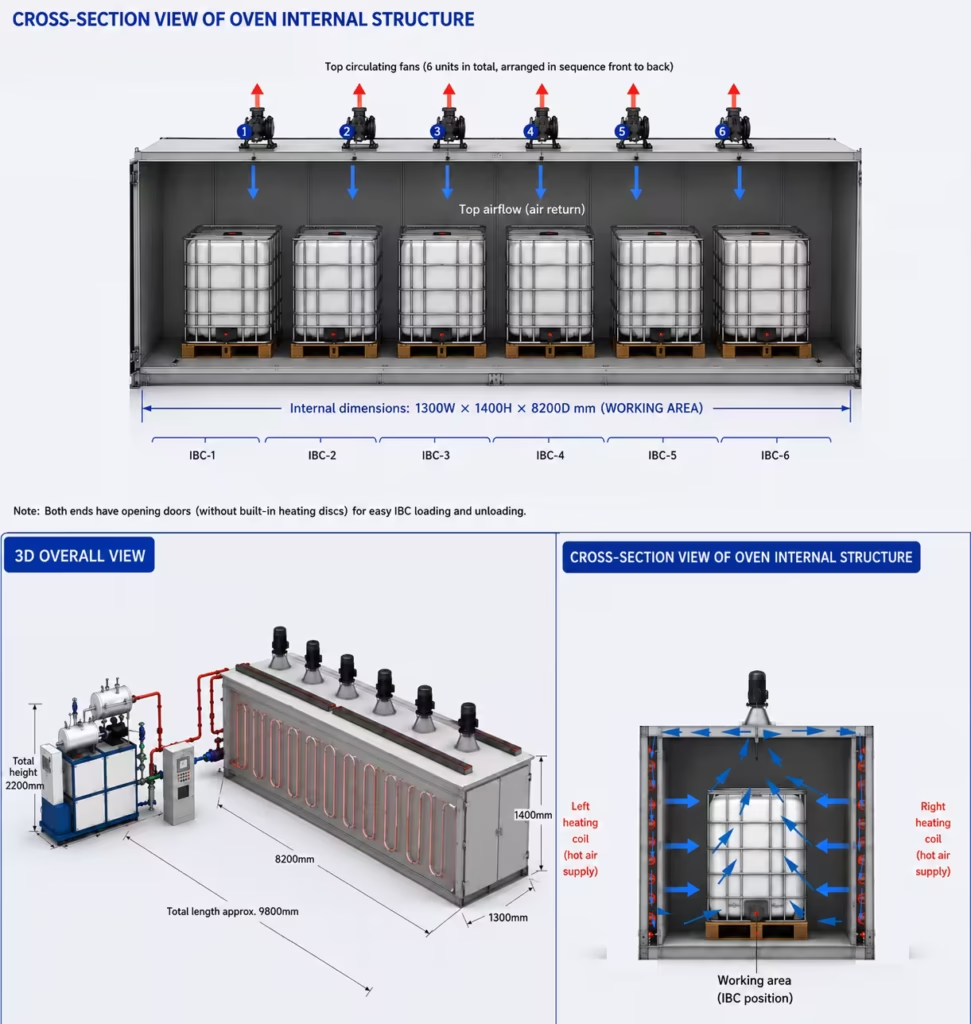
This oven type is considered when the material or process requires a more conservative heating architecture, not simply a standard hot-air oven. It can be configured for batch chambers, truck-in ovens, walk-in ovens, drum heating cabinets, outdoor hot boxes, or process-specific systems.
For materials requiring heat-source separation, controlled exhaust, and layered safety logic.
For coatings, resins, adhesives, or chemical products that may release flammable vapors.
For defense-sensitive or high-risk materials where conservative design review is required.
For winter chemical storage, freeze protection, controlled warming, and low-temperature holding of drums, IBCs, and palletized chemical containers.
For solvent-related curing requirements. Compare with our industrial curing oven solutions
For special materials that require custom industrial ovens for special materials
Size & Loading
Chamber Size and Loading Method
ZonHoo does not treat this as a fixed-size standard cabinet. The oven can be configured around material shape, loading weight, process risk, required exhaust volume, and site installation conditions.
- Batch oven for trays, containers, racks, or small drums
- Truck-in oven for trolley loading and removable racks
- Walk-in oven for large chambers, drums, IBCs, or palletized loads
- Outdoor hot box configuration for low-temperature chemical storage heating
- Custom door, sealing, containment, and exhaust design
For non-hazardous large-part heating, customers may also compare our truck-in oven loading system and walk-in oven chamber design.
Control Strategy
Temperature Range and Process Control
This oven is normally selected for stable, controlled, safety-focused heating rather than maximum temperature alone. ZonHoo reviews the chamber temperature, oil temperature, heating curve, holding time, ramp rate, and required temperature uniformity before selecting the final system.
- Working and maximum temperature based on material risk
- Multi-step ramp / soak recipes where required
- Chamber temperature and oil temperature monitoring
- Independent over-temperature limiter
- Alarm output, emergency stop, and shutdown logic
- Optional data logging or recorder for traceability
For broader control options, see our industrial oven temperature control systems.
| Control Item | Purpose |
|---|---|
| Thermal oil temperature | Controls heating-medium stability and high-limit protection. |
| Chamber air temperature | Controls actual process temperature around the material. |
| Exhaust / purge confirmation | Prevents heating from starting without defined airflow logic. |
| Safety shutdown | Stops heating on abnormal airflow, over-temperature, LEL alarm, or emergency signal. |
Airflow & Vapor Control
Airflow, Exhaust and Purge Design
For hazardous-material heating, airflow is not only about temperature uniformity. It is also part of vapor control. ZonHoo reviews hot-air circulation, fresh-air intake, exhaust outlet, purge cycle, airflow confirmation, and safety interlocks according to the material and site conditions.
- Pre-purge before heating is enabled
- Continuous or process-specific exhaust during operation
- Circulation fan and exhaust fan confirmation
- Heater shutdown on airflow or exhaust abnormality
- Optional LEL-based alarm, ventilation response, or heating shutdown
For more detail, see our guide to oven purge logic and LEL monitoring

Heating Method Comparison
Direct Electric Heating vs Indirect Thermal-Oil Heating
Different heat sources can be used in industrial ovens. For hazardous materials, the selection should consider ignition-source exposure, vapor risk, site utilities, maintenance, and local safety requirements.
| Heating Method | Typical Use | Limitation for Hazardous Materials | When to Consider |
|---|---|---|---|
| Direct electric heating | Standard drying, curing, preheating, and batch heating | Heating elements may be closer to process air or chamber structure. | Ordinary non-hazardous processes with normal safety requirements. |
| Gas heating | Large industrial heating where fuel is available | Combustion system introduces additional process safety review. | Large systems where gas is preferred and site safety conditions allow. |
| Steam heating | Low-temperature heating with existing steam supply | Limited temperature range and dependency on site steam system. | Low-temperature processes with available steam infrastructure. |
| Indirect thermal-oil heating | Hazardous and sensitive materials requiring heat-source separation | More complex system, but offers a stronger separation between heat source and process chamber. | Hazardous goods, solvent-related heating, energetic materials, chemical processing, conservative safety projects. |
For ordinary non-hazardous batch heating, see our industrial oven product range.
Custom Package
Optional Explosion-Protected Features
The final package is selected after reviewing the material, solvent data, process temperature, vapor release, loading volume, exhaust conditions, and local hazardous-area requirements.
| Safety Category | Available Options |
|---|---|
| Vapor control | Exhaust fan, fresh air inlet, purge cycle, airflow confirmation, exhaust failure shutdown |
| Monitoring | LEL monitoring, temperature recorder, pressure monitoring, alarm output, shutdown logic |
| Electrical package | Rated wiring, explosion-proof motor, junction box, grounding, anti-static consideration, separated cabinet |
| Mechanical safety | Pressure relief, door interlock, emergency stop, containment tray, guarded hot surfaces |
| Thermal oil protection | Oil flow switch, oil temperature limiter, oil pump alarm, low oil level protection, expansion tank |
| Compliance support | Third-party review, FAT, safety documentation, local-code coordination, project-specific acceptance records |
Manufacturer Support
Custom Explosion-Proof Oven Manufacturer Support from ZonHoo
ZonHoo supports hazardous-material oven projects from early process review through oven structure, thermal oil system, airflow, interlocks, documentation, and manufacturing. This product is not treated as a simple standard cabinet. It is engineered around the customer’s material risk and site requirements.
- Material and process review before design
- Heating method selection and thermal-oil system sizing
- Chamber, loading, door, sealing, and containment design
- Airflow, exhaust, purge, and vapor-control logic
- Electrical package, interlocks, alarms, and safety shutdowns
- FAT, safety logic description, and project documentation
- Third-party review coordination where required
For broader supplier capability, see our custom industrial oven manufacturer .
Before Quotation
What We Need to Design the Right Explosion-Proof Thermal Oil Oven
| Information Required | Why It Matters |
|---|---|
| Material name and composition | Determines vapor, corrosion, contamination, and heating risk. |
| Solvent type and flash point | Helps assess flammable vapor risk and safety margin. |
| Loading amount per batch | Affects vapor release, exhaust design, chamber size, and heating power. |
| Working and maximum temperature | Determines thermal oil temperature, chamber design, insulation, and safety limits. |
| Heating curve | Affects ramp rate, purge logic, holding time, and control design. |
| Chamber size and loading method | Determines airflow path, door structure, cart design, and containment. |
| Indoor or outdoor installation | Affects cabinet design, weatherproofing, exhaust, and service access. |
| Hazardous area classification | Determines rated components, wiring, motors, and electrical package. |
| Local safety requirements | Affects XP / ATEX-related package, third-party review, and documentation. |
| Exhaust connection condition | Determines vapor discharge, ducting interface, and fan selection. |
Related Engineering Support
Explosion-Proof Oven Engineering & Buyer Guides
How to evaluate solvent vapor risk, purge logic, LEL monitoring, and safety layers.
General oven selection logic for size, temperature, loading, airflow, and throughput.
Manufacturing, engineering, testing, and support capability for custom oven projects.
Recommended future support article for this product page.
Learn how weatherproof hot boxes help protect drums, IBC totes, and chemical raw materials from winter freezing, viscosity rise, and outdoor storage problems.
For viscous raw materials stored in drums or IBC totes before pumping, pouring, mixing, transfer, or production use.
Understand heat-source separation, isolated heating elements, indirect heating, and when a no-exposed-element oven should be reviewed.
A project reference for chemical storage heating, controlled warming, drums and IBC totes, winter storage, and hazardous-material heating review.
按钮:
Explosion-Proof Thermal Oil Oven FAQ
What is an explosion-proof thermal oil oven?
It is a custom industrial oven system that uses indirect thermal-oil heating and layered safety measures for hazardous-material or solvent-related processes. The system can include heat-source separation, purge logic, ventilation, interlocks, optional LEL monitoring, rated wiring, explosion-proof components, and project-specific documentation.
Why use indirect thermal-oil heating instead of direct electric heating?
Indirect thermal-oil heating separates the primary heat source from the process chamber. Heat is transferred through a thermal oil loop and heat exchanger, reducing direct ignition-source exposure inside or near the hazardous material-processing space.
Does thermal oil heating make the oven completely explosion-proof?
No. No heating method alone makes a process completely risk-free. Indirect thermal-oil heating helps improve heat-source separation, but explosion protection still depends on process safety review, ventilation, purge logic, interlocks, optional LEL monitoring, rated electrical components, and local safety requirements.
Can this oven be used for solvent-containing materials?
It can be evaluated for solvent-containing materials after reviewing solvent type, flash point, vapor release, loading amount, working temperature, exhaust conditions, chamber volume, and site requirements. The final design may include purge logic, exhaust, LEL monitoring, and rated electrical components where required.
When is LEL monitoring required?
LEL monitoring is considered when flammable vapor concentration needs to be detected as part of the safety system. Whether it is required depends on material data, solvent release, process temperature, ventilation strategy, site classification, and local code requirements.
Can ZonHoo provide XP or ATEX-related packages?
ZonHoo can configure rated wiring, explosion-proof motors, junction boxes, grounding, interlocks, and XP / ATEX-related component packages where required by the project. Third-party review or certification coordination can be arranged when needed.
What information is needed before quotation?
We need material name, solvent type, flash point, loading amount, chamber size, working and maximum temperature, heating curve, installation location, exhaust conditions, hazardous area classification, and local safety requirements.
Can the oven be designed as a walk-in, truck-in, or drum-heating chamber?
Yes. The indirect thermal-oil architecture can be adapted to different chamber forms, including batch ovens, truck-in ovens, walk-in ovens, drum heating cabinets, IBC heating chambers, and outdoor heated hot boxes depending on the process and site conditions.
Is this an oven without exposed heating elements?
Yes. In this indirect thermal-oil heated oven design, the process chamber does not rely on exposed electric heating elements for direct heating. Heat is transferred through a thermal oil loop and heat exchanger, helping separate the primary heat source from the hazardous material area.
Can it be used for outdoor chemical storage heating?
Yes. The system can be configured as an outdoor chemical storage hot box for low-temperature holding, freeze protection, viscosity control, and winter storage heating of drums, IBCs, or palletized chemical containers.
Need a Safety-Focused Hazardous-Material Oven?
Send us your material data, solvent information, loading method, temperature profile, and site safety requirements. ZonHoo will review whether an explosion-proof thermal oil oven is suitable for your process.