

Chain Conveyor Oven
ZonHoo chain conveyor ovens are engineered for pallets, fixtures and heavier products that need positive mechanical support through a continuous heating process. Chain pitch, support geometry, load distribution and maintenance access are designed together so the conveyor remains stable while the thermal process stays repeatable.
Watch a ZonHoo chain conveyor oven configured for stable continuous transport of heavier parts, pallets and fixture-supported loads.
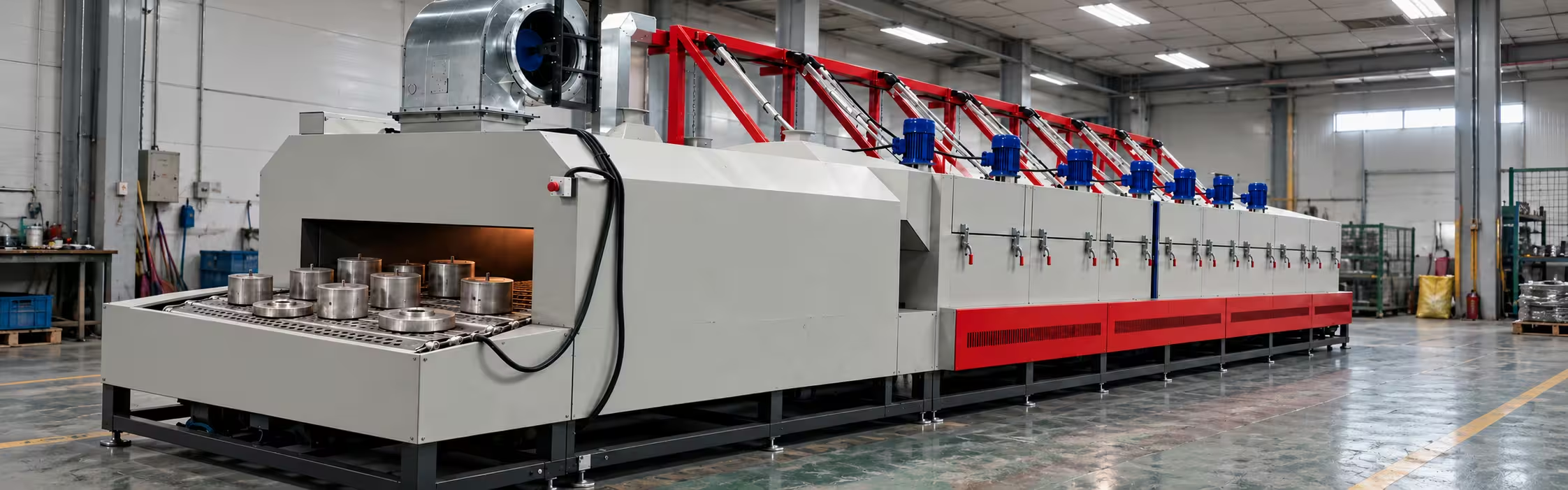
What Makes a Conveyor Oven “Chain Conveyor”?
A chain conveyor oven carries the load on chain-driven support rather than relying on a conventional belt surface. The format is chosen when product weight, fixtures, pallets or repeatable positioning make belt transport less suitable.
- Loads can remain on dedicated pallets or fixtures through the heating process.
- Chain and support geometry can be sized around concentrated or uneven weight distribution.
- Positive drive helps preserve spacing and orientation through the thermal zone.
- Wear rails, sprockets, chain paths and access points can be planned for serviceability.
A Heavy-Duty Conveyor Direction, Not a Generic Belt Oven
If your production only needs a standard belt system, start with the belt-based industrial conveyor oven. If you are comparing the full range of conveyor architectures first, compare continuous oven configurations.
This page is for buyers whose load itself forces a heavier transport decision. It also covers projects commonly described as a heavy duty chain conveyor oven or, where a chain-driven plate / slat surface is used, a slat conveyor oven.
Four Decisions That Control Chain Conveyor Reliability
For chain conveyor ovens, the conveying hardware and thermal process cannot be treated as separate systems. Mechanical loading changes how the product travels through the heat field and how the machine must be serviced.
Chain pitch & support geometry
Pitch, rail spacing and support points must match pallet dimensions, fixture geometry and the required transfer path.
Load capacity & weight distribution
Maximum unit load is not enough; concentrated loads, overhang and center of gravity affect rails, shafts and drive sizing.
Drive, tracking & indexing
Drive torque, sprocket engagement, speed control and positioning strategy must suit continuous or indexed production.
Wear & maintenance access
Wear rails, lubrication strategy, inspection openings and replaceable components should be reachable without excessive downtime.
Choose the Conveyor Around the Load, Not the Oven Name
The conveying method should be decided from product support and mechanical duty first. Thermal sizing follows after the load path is stable.
Chain Conveyor Oven
- Heavy or concentrated loads
- Pallets, fixtures and dedicated tooling
- Positive mechanical support and positioning
- Serviceable chain, sprocket and wear-rail system
- Good fit where product orientation must stay fixed
Belt Conveyor Oven
- Light to medium loads
- Parts can ride directly on a belt or carrier
- Simpler flat product transport
- Often lower mechanical complexity
- Better fit where fixtures are not required
For a detailed procurement comparison, use our guide to choose between belt and chain conveying.
Define the Chain Load Before Finalizing Oven Length
Chain conveyor projects should be quoted from the load format and production target. These inputs determine both the mechanical conveyor and the thermal section.
| Engineering input | What to define | Why it matters |
|---|---|---|
| Pallet / fixture size | Length, width, support points, overhang and loading orientation | Defines rail spacing, chain center distance and usable oven opening. |
| Load weight | Weight per carrier plus any concentrated load points | Drives chain size, rail structure, shaft and motor torque selection. |
| Required output | Parts/hour, pallets/hour, spacing and loading rhythm | Determines conveyor speed range and whether indexing is necessary. |
| Thermal exposure | Target temperature, product heat-up, soak or drying time | Determines heated length after the mechanical speed window is known. |
| Maintenance window | Inspection frequency, access direction and spare strategy | Influences wear-rail layout, service panels and replaceable chain components. |
For the wider selection process, review the industrial conveyor oven selection guide. For process-time calculations, see how to calculate conveyor belt speed and residence time, then use the conveyor oven sizing guide to translate residence time into a practical machine length.
Where Chain Conveyor Ovens Add the Most Value
The strongest use cases are processes where the product cannot simply sit on a light belt and where the carrier or fixture is part of the production method.
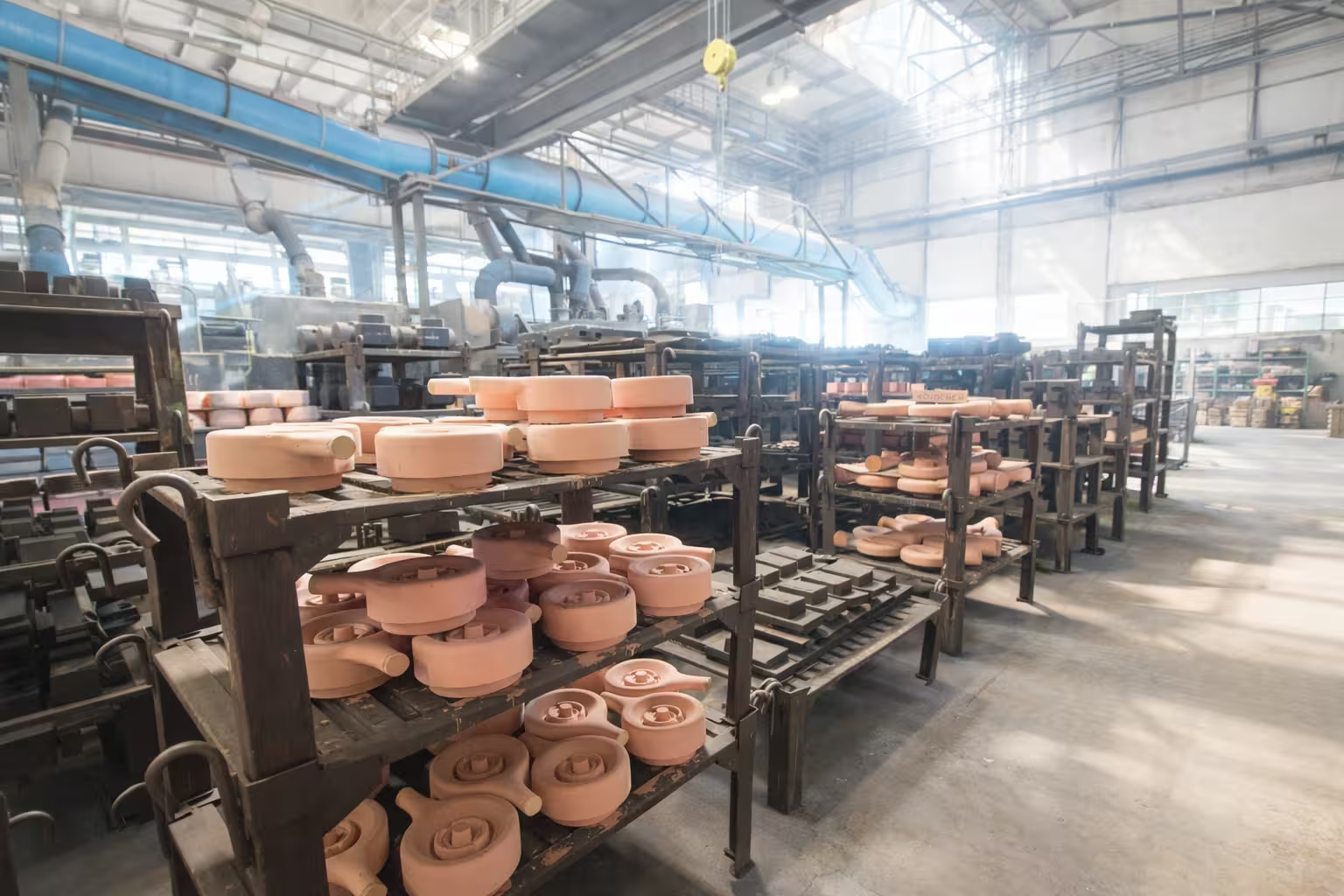
Sand Core & Mold Drying
Fixture-supported or heavier foundry loads can benefit from stable carrier spacing, controlled residence time and maintainable conveyor hardware.
sand core and mold drying →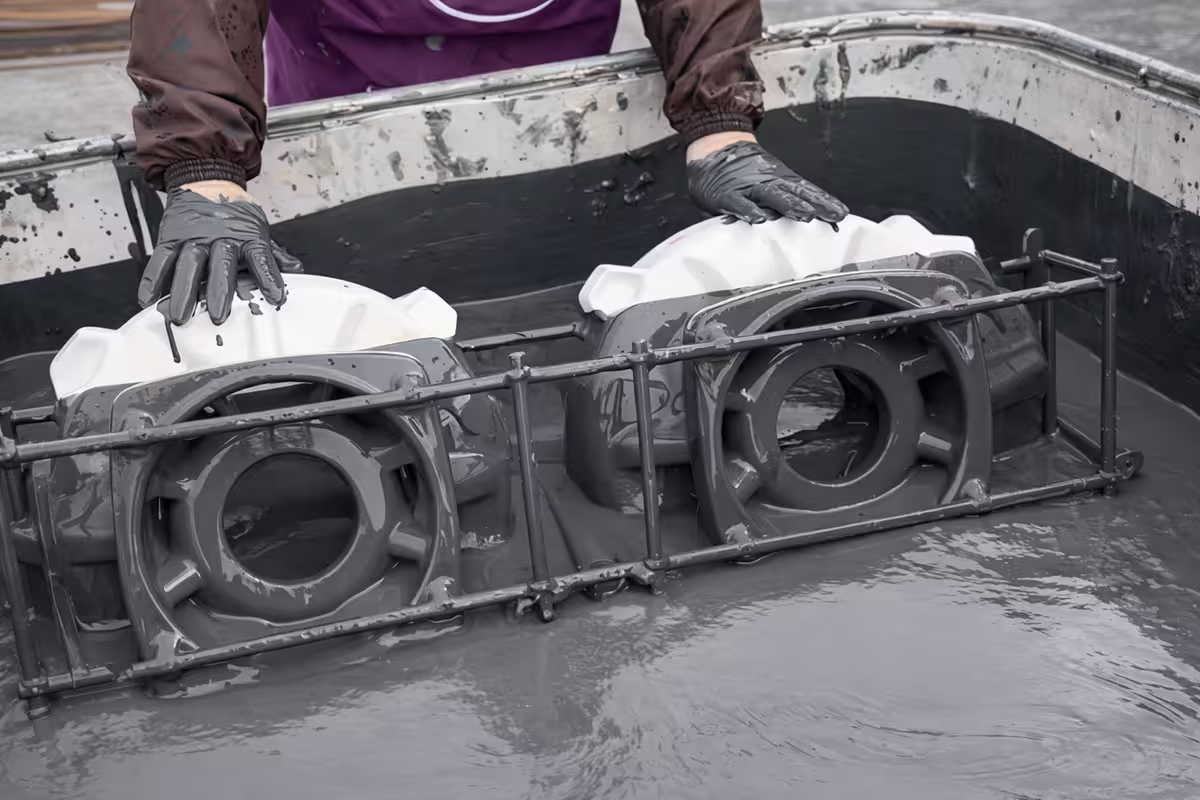
Foundry Production
Heavy castings, fixtures and repetitive thermal handling make foundry lines a natural fit for chain-supported conveyor systems.
foundry conveyor oven applications →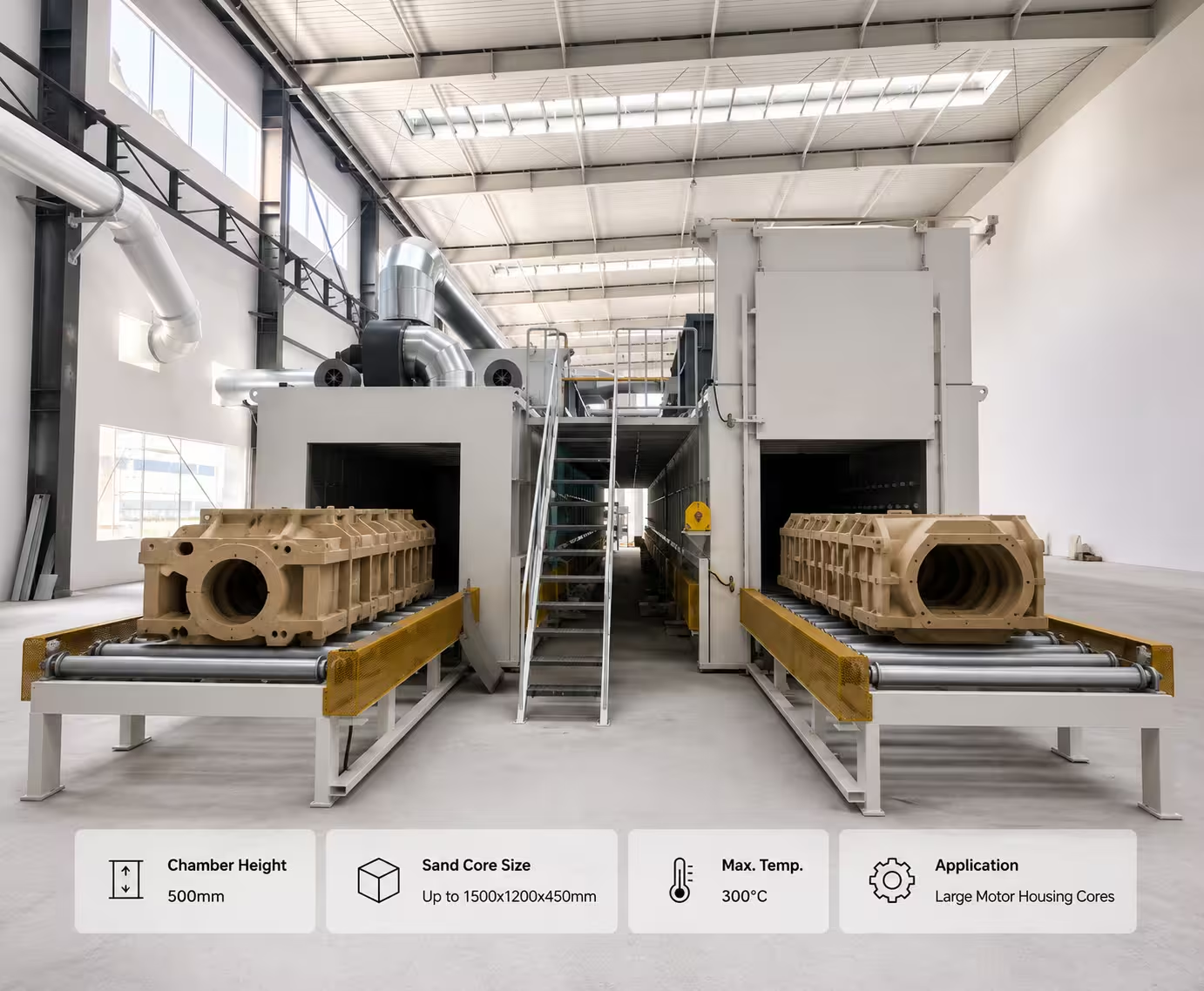
Turkey Sand Core Conveyor Project
See how conveyor speed, multiple thermal zones, cooling and production-line requirements were translated into a real foundry project scope.
Turkey sand core conveyor oven project →Plan the Conveying Hardware for Long-Term Uptime
Wear parts, product support and conveyor serviceability should be discussed before fabrication—not after the line is installed.
Conveyor Hardware Selection
Even when chain is the final choice, it helps to understand alternative support surfaces, material limits and conveyor hardware options across continuous ovens.
Wear, Spares & Maintenance Planning
Chain, sprockets, wear rails, drive components and service access should be planned around the required uptime and maintenance window.
Chain Conveyor Oven Questions
When should I choose a chain conveyor oven instead of a belt conveyor oven?
Choose chain conveying when the product is heavy, fixture-supported, palletized or needs more positive mechanical support and positioning than a standard belt can provide.
How is chain pitch selected for an industrial oven?
Chain pitch is selected from pallet or fixture geometry, support spacing, load distribution, transfer requirements, sprocket design and the required operating speed. It should be treated as part of the mechanical load design rather than selected from temperature alone.
What information is needed to size the conveyor drive?
Useful inputs include total moving load, load per carrier, chain length, friction, incline or transfer conditions, acceleration requirements, target speed and any indexing or stop-positioning requirement.
How should maintenance access be planned?
Wear rails, chain tension points, sprockets, bearings and drive components should be reachable from service panels or removable sections so inspection and replacement do not require unnecessary disassembly of the oven body.
Can a chain conveyor oven support multiple heating zones?
Yes. The conveyor method and thermal zoning are separate design dimensions. Chain-supported loads can move through single- or multi-zone heating, drying, curing or cooling sections depending on the process profile.