


Drum Heating Ovens
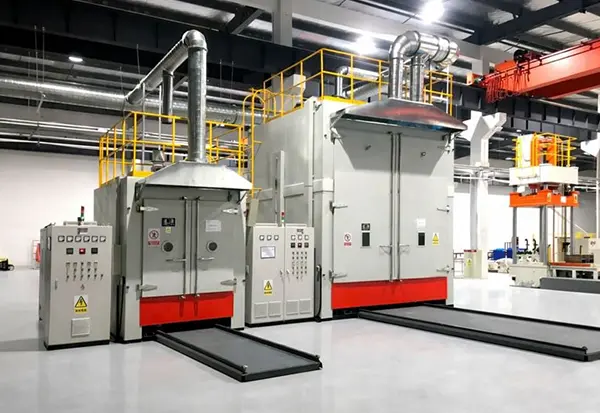
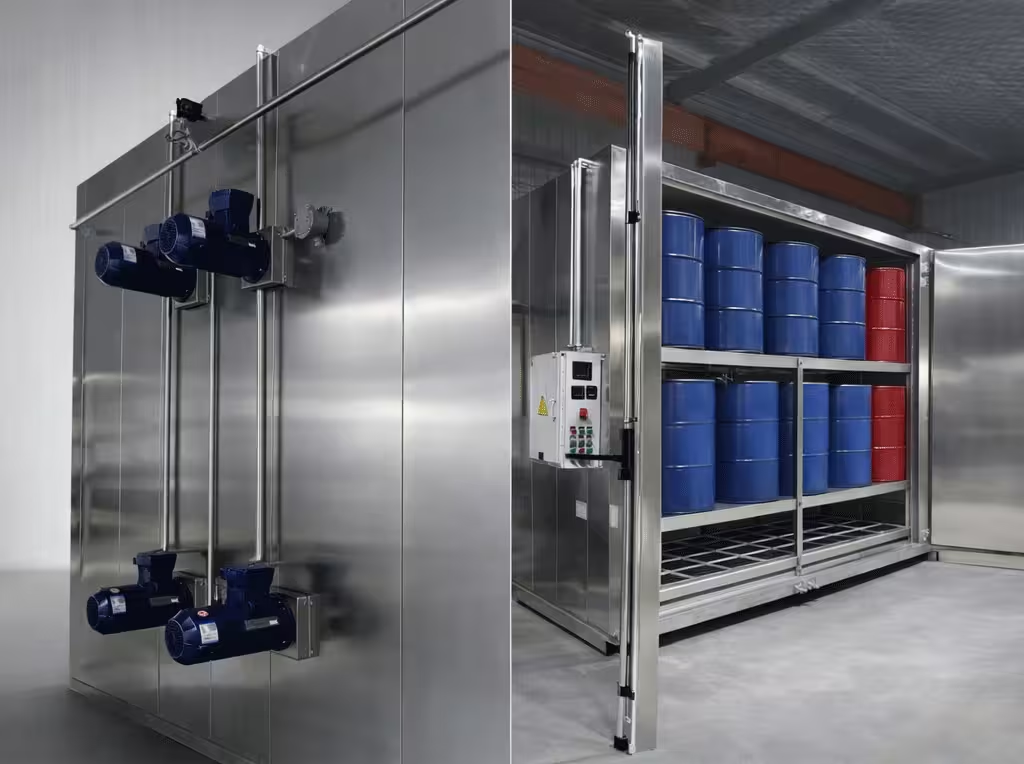
ZonHoo Drum Heating Ovens uniformly and quickly heat 20-200L drums and IBCs to pumpable temperature for adhesives, sealants, waxes, resins, oils, and bitumen. All this is done with airflow combination, PID control, spill containment, and solvent-safe packages, which reduce preheating time and scrap to stabilize downstream mixing, filling, and coating.
Fast time-to-pump window: High-efficiency recirculation and combination airflow around curved drum surfaces significantly reduce warm-up time (material-dependent).
Uniform, edge-to-core heating: Tuned ducting minimizes cold cores and hot skins; optional drum-rotation cradle for difficult materials.
Stable viscosity = stable quality: Ramp/soak control avoids overshoot; hold-bands keep viscosity consistent for pumping, dispensing, and roll-to-roll processes.
Solvent-bearing (Class-A) options: Purge timers, exhaust, LEL sensor/integration, explosion-proof electrical, door interlocks, and grounding/bonding kits.
Spill & hygiene design: Integrated drip pans, removable liners, optional 304 SS interior; easy clean-down between chemistries.
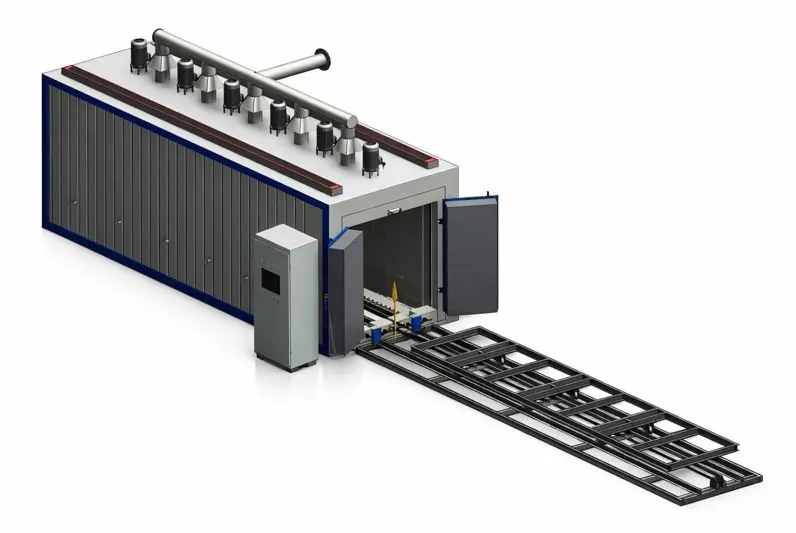
Loading made simple: Pallet-jack/forklift friendly threshold, optional ramp or roller deck; single-side or pass-through doors.
Controls that production trusts: PID+SCR, recipe library, batch report (CSV/PDF), data logging, remote diagnostics, and alarms.
Energy efficiency: Tight gaskets, 100–150 mm insulation, auto-standby, and variable-speed recirc (VFD).
Build & finish: Industrial chassis, thermal breaks at doorsill, high-temp seals; electric (std) with optional gas, steam, or thermal-oil coils.
Configurations: 1-drum, 2-drum, 4-drum, 8-drum cabinets; IBC tote heater enclosure available.
From Concept to Installation —
We’ve Got You Covered
- Know your material: Confirm SDS, flash point, and any volatile/solvent content before setting temperature.
- Never heat sealed containers: Bungs must be vented to prevent pressure buildup; use vent caps as required.
- Set safe limits: Use independent high-limit controllers; do not exceed the material’s safe temperature range.
- Grounding & bonding: Always bond/ground drum, pump, and oven when handling flammable/solvent materials.
- Class-A practices when needed: For solvent-bearing loads, use purge/exhaust, LEL monitoring, interlocks, and EX components per site standard.
- Spill readiness: Use drip pans and spill containment; check fittings/hoses before pump-out.
- Airflow matters: Maintain specified drum spacing to ensure uniform heating; avoid blocking ducts.
- Routine checks: Inspect gaskets, latches, fans, elements, sensors; calibrate probes per your QA interval.
- Housekeeping: Keep the chamber clean to avoid cross-contamination and odor carryover.
Process & Product
Material(s) in drums (e.g., epoxy, PU, silicone, polysulfide, sealant, ink, coating, wax, bitumen, oil).
Starting ambient temperature and target pump temperature (°C/°F).
Target viscosity (or acceptable viscosity band) at pump temperature; any viscosity-vs-temperature data if available.
Required heat-up time and any ramp/soak/hold profile.
Solvent/volatile content, flash point, and whether Class-A/EX package is required.
Load & Throughput
- Drum type/size (e.g., 200 L / 55-gal; 20–30 L pails; IBC tote 1000 L).
- Batch size (1/2/4/8 drums) and batches per shift/day.
- Drum condition (steel/plastic, lined/unlined) and whether rotation assist is desired.
Site & Utilities
Power supply (V/phase/Hz) and preferred heat source (electric / gas / steam / thermal oil).
Floor space limits, door clearances, loading method (pallet jack / forklift), and pass-through need.
Controls/PLC preference, data logging, alarm/SCADA integration, and documentation standards.
Compliance needs (e.g., NFPA 86-style Class-A design), local EX standards, and FAT/SAT scope.
What does a Drum Heating Oven actually do?
ZonHoo conditions 20–200 L drums (and IBC totes) to a controlled pump window, delivering stable viscosity and flow for metering, filling, and coating—improving throughput and first-pass yield.
How fast vs. band/blanket heaters?
ZonHoo uses high-efficiency recirculation and combination airflow to heat the whole drum surface; customers typically cut warm-up time from hours to a fraction, accelerating line start-up and OEE.
What temperature uniformity can I expect?
ZonHoo maps load-zone uniformity at acceptance; typical results are ±2–3 °C (size/material dependent), with tighter bands on request. See: [Oven System Planning →]
Will my material overheat or degrade?
ZonHoo runs PID ramp/soak with independent high-limit and hold-bands to prevent overshoot and thermal degradation, stabilizing viscosity control during pump-out.
Do I need drum rotation?
ZonHoo offers rotation cradles for waxes, bitumen, and filled pastes to eliminate cold cores and reduce time-to-pump.
Can you handle solvent-bearing (Class-A) loads?
ZonHoo delivers Class-A/EX packages with purge/exhaust, LEL monitoring, interlocks, bonding/grounding, and EX electrics where required—aligned with common NFPA-style practices. See: [Commitment-To-Safety →]
Can I heat a sealed drum?
ZonHoo requires vented bungs per SDS to avoid pressure buildup; we provide guidance on safe fittings and transfer procedures.
What documentation do you provide for EHS and QA?
ZonHoo supplies a Documentation Pack: P&ID/GA drawings, Utility Matrix, wiring diagrams, I/O list, calibration certificates, and a commissioning checklist for audits.
How does the oven help improve production efficiency?
How many drums per batch?
ZonHoo standardizes 1/2/4/8-drum cabinets and builds customs on request; airflow and kW are sized to your RFQ heat-up time and throughput targets.
What heat sources are available?
ZonHoo offers electric (standard), plus indirect gas, steam, or thermal-oil coils to balance TCO and site utilities.
How do you manage spills and hygiene?
ZonHoo integrates stainless interiors, drip pans, and removable liners for fast changeovers and contamination control.
How is loading handled?
ZonHoo designs pallet-jack/forklift thresholds with optional ramps, roller decks, and pass-through doors to fit your cell layout. See: [Install & Engineering →]
Ordering, Lead-Time.
What information do you need for a fast RFQ?
ZonHoo asks for material/SDS (solvent content & flash point), start temp → target pump temperature, required heat-up time, batch size (drums/totes per shift), utilities (V/phase/Hz), and any Class-A/EX compliance.
What is the typical lead time and project plan?
ZonHoo standard builds are commonly 2–3 weeks depending on size/options. We run a gated plan design → fabrication → FAT → shipment → SAT, with weekly progress reports and milestone sign-off.
What after-sales support is included?
ZonHoo provides remote diagnostics, preventive-maintenance kits, spares lists, on-site service, and response SLA options; contracted uptime can reach ≥99.5%. See: [Service & Spare-Parts Center →]
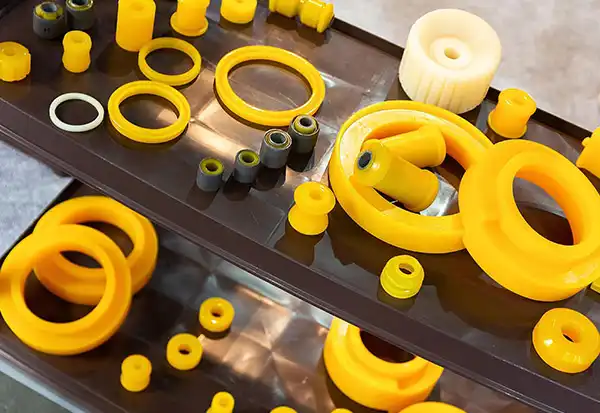
- Adhesives & Sealants: Epoxy, PU, silicone, polysulfide—bring to pumpable viscosity for metering/dispense.
- Coatings, Paints & Inks: Warm-to-flow for consistent viscosity and filterability before filling or coating.
- Bitumen/Asphalt & Roofing Compounds: Thaw and condition for transfer and blending.
- Greases & Lubricants: Reduce apparent viscosity to improve pumpability and filtration.
- Waxes & Paraffins: Controlled melt/soften without hot-spot degradation.
- Resins & Oligomers: Phenolic, polyester, vinyl-ester—precondition for mixing/impregnation.
- Oils (industrial): Pre-warm for dewatering, dehydration, or blending steps.
- IBC Tote Heating: Enclosures sized for 1000 L totes with the same safety/control package.