

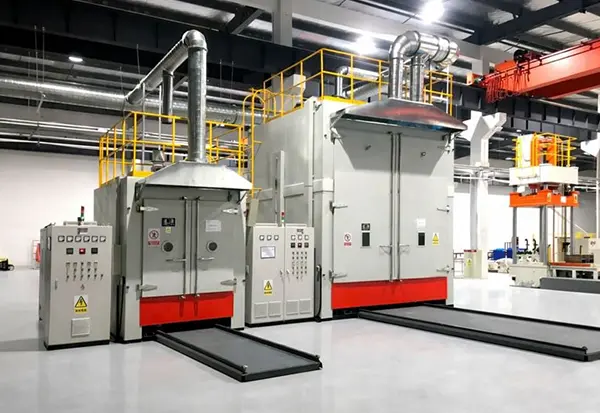
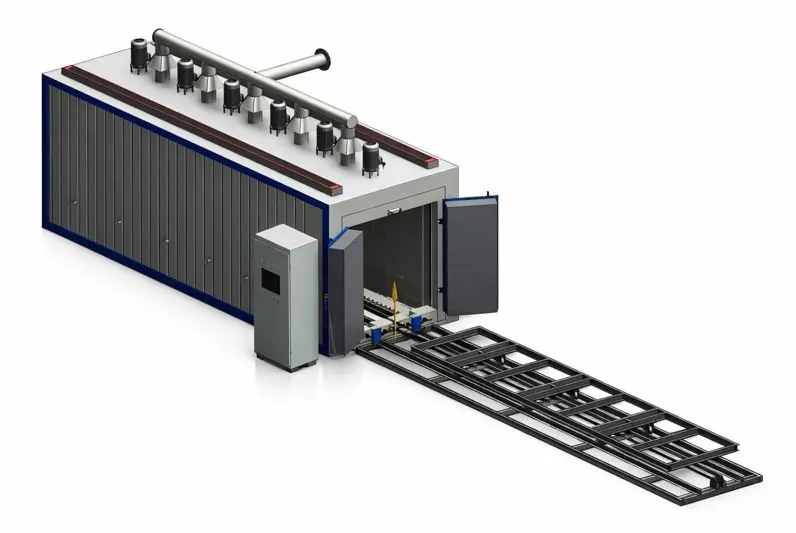

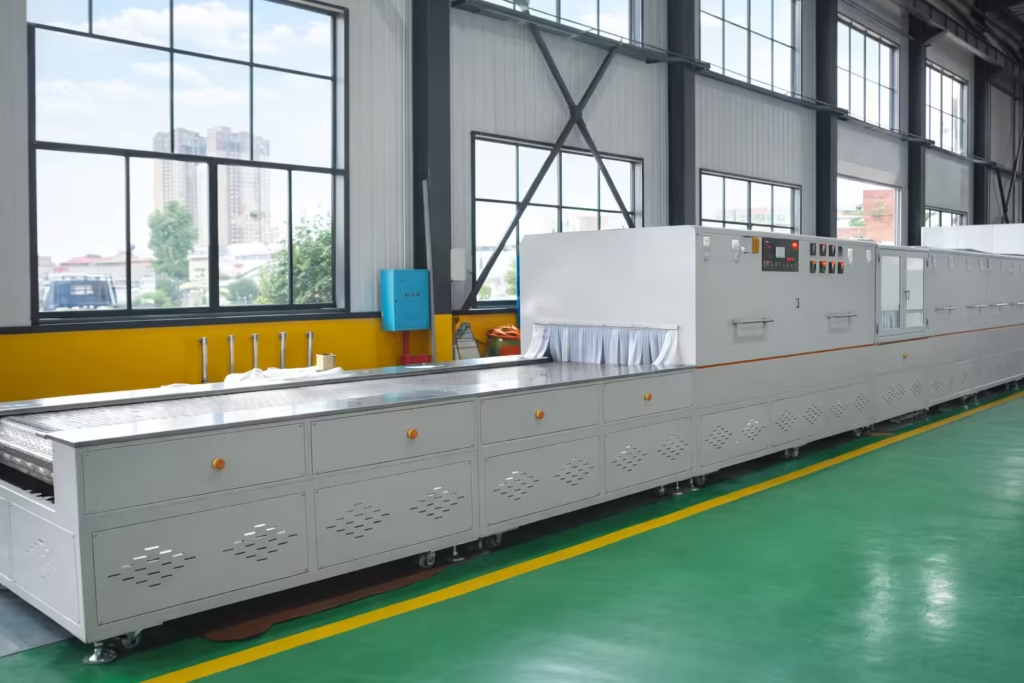
Chain Conveyor Oven
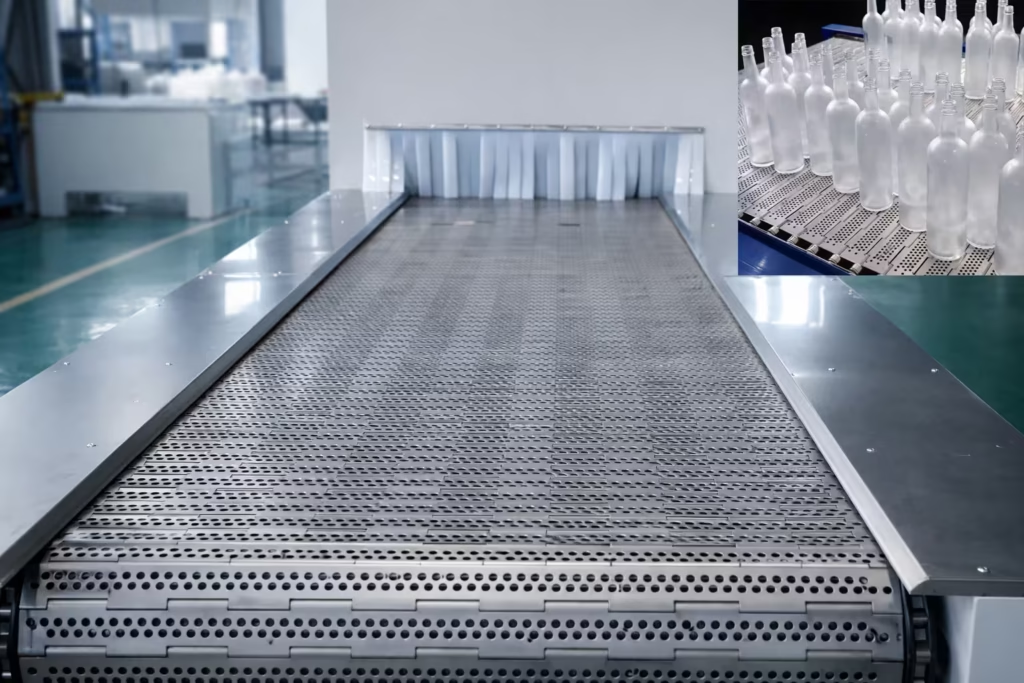
ZonHoo chain conveyor oven are designed for continuous production where the conveying system must handle heavier loads, pallets, or fixtures that are not ideal for belt conveying. In a chain line, stability comes from the chain itself—pitch, drive, and support define how parts move through heat exposure—so repeatable results depend on load handling, carry stability, and engineered access for wear-point maintenance.
As an OEM/ODM manufacturer, ZonHoo starts with an engineering review of your load format (pallet/fixture), weight distribution, line speed window, and heat coverage concept, then returns an RFQ-ready scope—chain conveying concept, thermal coverage approach, utilities, controls, and documentation scope—with FAT/SAT support and acceptance checks to streamline approval and line integration.
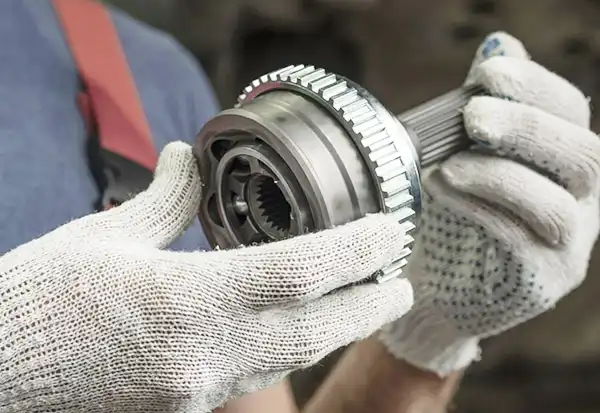
- Surface hardening and stress relief for metal components
- Temperature control and uniform heating across the load
- Cooling profile engineered for material-specific stress relief
- Repeatable results with stable temperature distribution
- Recipe control and data logging (opt.)
- RFQ-ready delivery: drawings, FAT/SAT, acceptance checks
What Makes a Conveyor Oven “Chain Conveyor”
A chain conveyor oven is defined by the conveying method: loads ride on chain-driven conveying rather than a belt, enabling stable transport of heavier parts and fixtures. Chain conveyor projects typically exist because one or more of these realities apply:
- Fixtures and pallets are required: parts must be carried on tooling, not directly on a belt
- Load weight is higher: heavy-duty carrying is part of the process requirement
- Stability matters: consistent orientation and spacing must be maintained through the heat field
- Wear points exist: chain drive and support must be serviceable without long downtime
- Coverage must match fixtures: heat exposure must be engineered around tooling geometry
Why Choose Chain Conveyor Ovens
A chain conveyor oven is the right choice when heavy loads, fixtures, or palletized carrying are non-negotiable.
Key advantages (why B2B buyers choose it):
- Fixture compatibility: parts stay in tooling through the full heating exposure
- Stable handling: chain conveyance supports repeatable spacing and orientation
- Heavy-load readiness: designed around weight distribution and support points
- Uptime planning: service access for chain wear points reduces downtime risk
- RFQ clarity: chain concept, coverage approach, and acceptance checks can be defined early
Typical Applications
- Palletized or fixtured parts requiring stable orientation through heating
- Heavy assemblies where belt conveyance is not suitable
- Continuous lines using fixtures for spacing control and repeatability
- Production needing serviceable wear-point design to protect uptime
- Industrial lines requiring documented setup and acceptance checks (project-defined)
Options & Customization
- Pallet/fixture conveying concept and spacing plan (project-defined)
- Chain pitch, support layout, and drive strategy (project-defined)
- Maintenance access and inspection layout for wear points (project-defined)
- Controls: recipes, alarms, parameter locks, data logging (opt.)
- Sensors/verification points (project-defined)
- I/O for line coordination (ready/busy/fault/line stop) (opt.)
- Documentation scope: drawings, manuals, acceptance checks, FAT/SAT support (project-defined)
Related Solutions & Guides
- Chain conveying for pallets/fixtures
- Heavy-load handling concept
- Chain pitch & drive planning
- Heat coverage over fixtures
- Maintenance access for wear points
- Recipe control & data logging (opt.)
- Alarms & safety interlocks (opt.)
- Documentation: FAT/SAT scope (project-defined)
Let’s talk about how we can support your thermal processing goals. Contact our team to explore the right solution for your needs.