


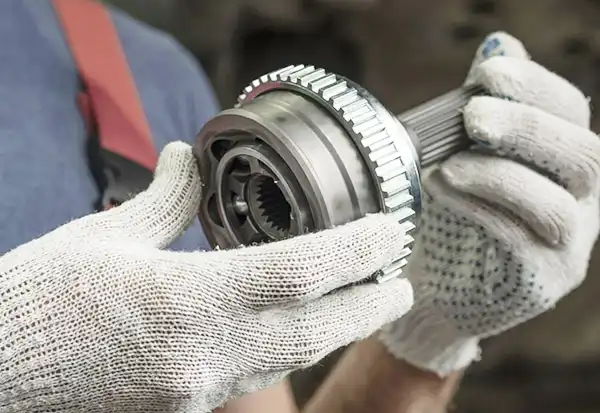
Industrial Ovens for Post-Curing
Post-curing is a controlled thermal process used after initial curing to complete crosslinking, improve material stability, and help parts reach their target mechanical and thermal performance. For composite parts, epoxy systems, resin-based components, and adhesive-bonded assemblies, a stable post-curing process is essential for repeatable quality, dimensional control, and long-term reliability. ZonHoo provides industrial oven solutions for post-curing applications with controlled airflow, uniform heating, recipe-based control, and production-oriented chamber configurations.
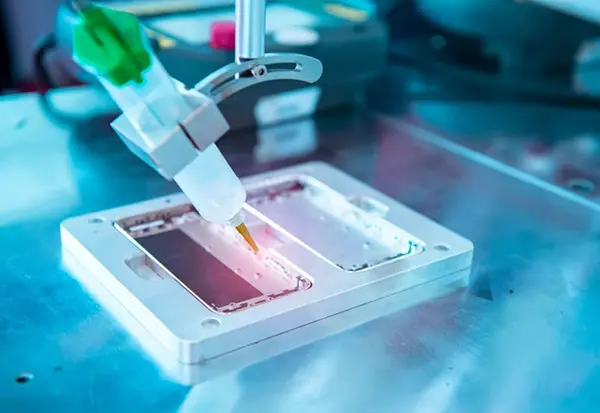
Why This Process Matters
Why Post-Curing Requires Controlled Thermal Processing
Post-curing is not simply additional heating after initial cure. It is a controlled thermal step that helps materials complete crosslinking, increase thermal resistance, reduce internal stress, and reach more stable final properties. Without proper temperature control, airflow design, and cycle consistency, post-curing results can vary from batch to batch and affect downstream quality.
Crosslinking Completion
A controlled post-curing cycle helps polymer systems complete crosslinking so parts can reach their intended performance level.
Thermal Stability Improvement
Proper post-curing can improve glass transition temperature, heat resistance, and long-term dimensional stability in demanding applications.
Cycle Consistency
Stable temperature holding and repeatable oven control help reduce curing variation between parts, trays, or batches.
Stress and Distortion Control
A well-managed thermal profile helps reduce residual stress, deformation risk, and quality instability during post-curing.
Typical Applications
Where Post-Curing Is Commonly Used
Post-curing is commonly used in industrial processes where final material performance depends on complete cure development, controlled heat exposure, and repeatable thermal conditions.
Composite Structural Parts
Post-curing is widely used for carbon fiber and fiberglass components that require improved strength, stiffness, and thermal resistance after initial cure.
Epoxy Resin Components
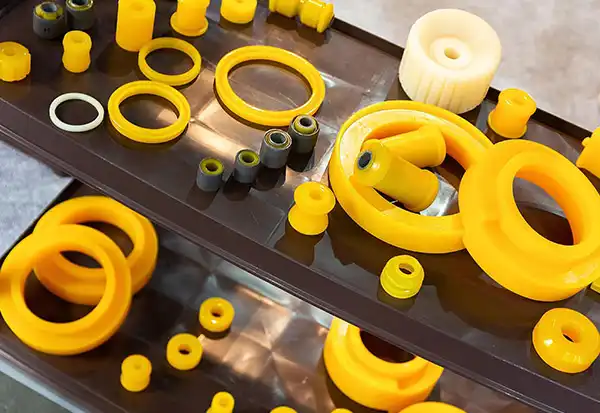
Epoxy-based parts often require post-curing to achieve fuller crosslinking, higher Tg, and more stable long-term performance in service conditions.
Adhesive-Bonded Assemblies
In some bonded products, post-curing supports final bond stability and helps improve the consistency of assembled part performance.
Automotive Composite and Bonded Parts
Automotive lightweight structures, bonded housings, and engineered subassemblies may use post-curing to improve durability and thermal stability.
Electrical Insulation Materials
Post-curing is used for insulation-related resin systems and molded components where stable dielectric and thermal properties are required.
High-Performance Resin Parts
Engineered resin components for industrial, aerospace, or specialty manufacturing often rely on post-curing for more complete property development.
Selection Guidance
How to Match the Right Oven Direction to Post-Curing
Different post-curing applications call for different oven configurations. The right oven direction depends on part size, load format, throughput, cleanliness requirements, and the level of control needed for stable thermal processing.
| Process Need | Typical Requirement | Recommended Oven Direction |
|---|---|---|
| Standard batch post-curing of resin or composite parts | Repeatable cycle control, stable chamber heating, practical batch loading | Post-Curing Oven / Batch Curing Oven / Industrial Batch Oven |
| Higher uniformity requirements for engineered parts | Strong airflow circulation, tighter temperature consistency, repeatable cure profile | Forced Convection Curing Oven / Industrial Electric Oven |
| Tray-loaded or fixture-loaded post-curing | Convenient loading movement, rack or trolley handling, stable batch production | Trolley Type Curing Oven / Truck-In Oven |
| Large composite structures or oversized bonded assemblies | Large chamber volume, operator access, practical handling for bulky parts | Walk-In Oven / Large Truck-In Oven / Large Convection Oven |
| Heavy tooling or dense production loads | Strong structural support, load-handling convenience, stable heat exposure across heavy batches | Heavy-Duty Oven / Large Truck-In Oven |
| Long parts, deep fixtures, or non-standard load geometry | Extended chamber depth or special internal clearance for difficult part layouts | Wide/Deep Oven / Custom Batch Oven |
| Continuous post-curing in production lines | Inline movement, repeatable residence time, integration with upstream and downstream process flow | Industrial Conveyor Oven / Large Conveyor Oven / Custom Continuous Oven |
| Fast surface-dominant or thin-part post-curing in line | Controlled radiant exposure, continuous movement, compact production layout | Infrared Conveyor Oven |
| Special atmosphere-sensitive post-curing requirements | Controlled atmosphere, reduced oxidation or process-specific chamber condition | Inert Gas Ovens / Custom Batch Oven |
EQUIPMENT DIRECTION
Recommended ZonHoo Oven Solutions for Post-Curing
Post-curing requirements vary by part size, loading format, cure uniformity target, and production flow. The most suitable oven solution is usually the one that matches the real curing condition—not just the temperature range. Below are the ZonHoo oven directions most relevant to industrial post-curing applications.
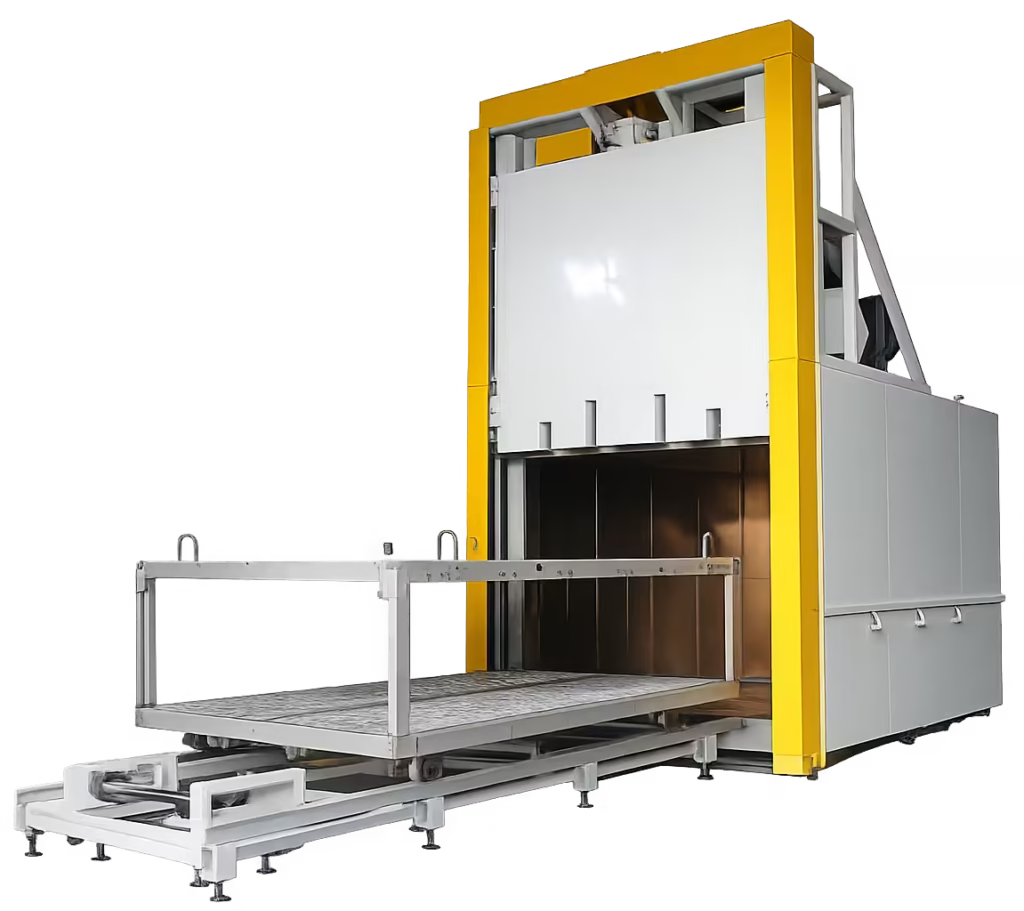
Post-Curing Oven
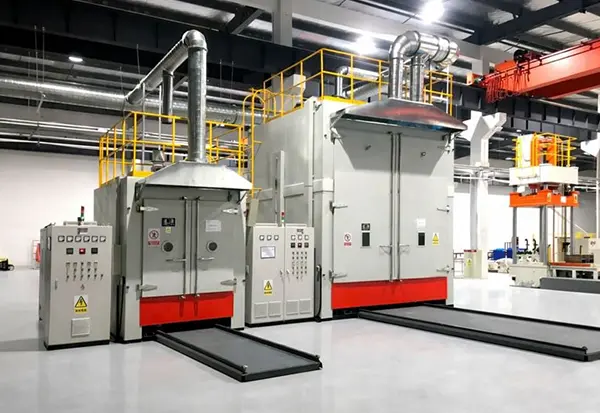
A dedicated post-curing oven is the most direct solution for controlled thermal cycles used after initial curing. It is suitable for composite parts, resin systems, bonded assemblies, and engineered components that require stable temperature holding, repeatable cure profiles, and production-ready consistency.
Best for:Small precision parts, varied batches, tray loading, and controlled shelf processing
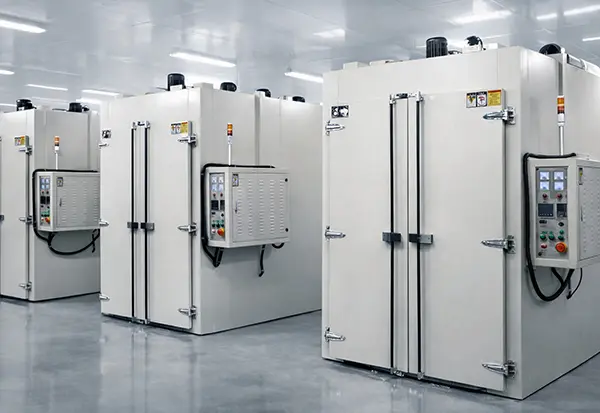
Forced Convection Curing Oven
For engineered parts that require stronger airflow control and tighter temperature consistency, forced convection curing ovens provide a more stable thermal environment during post-curing. This direction is especially relevant when uniformity and repeatable material performance are critical.
Best for:Large assemblies, carts, fixtures, and oversized bonded products
Trolley Type Curing Oven
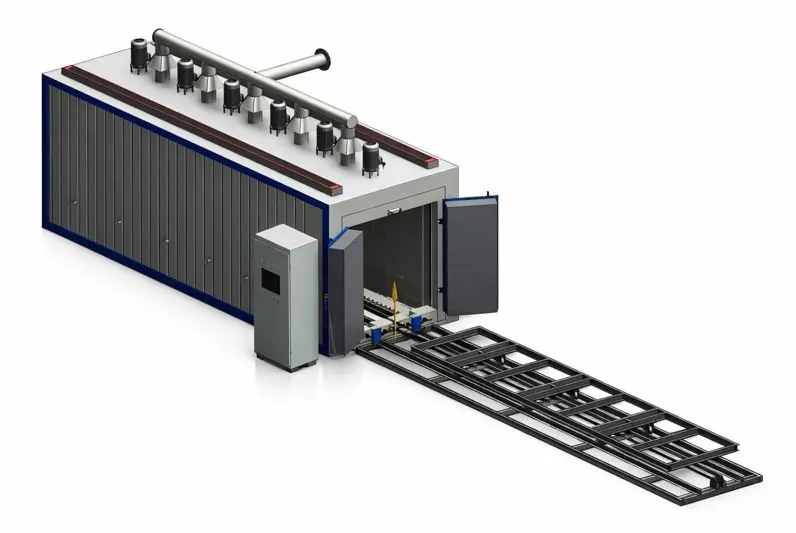
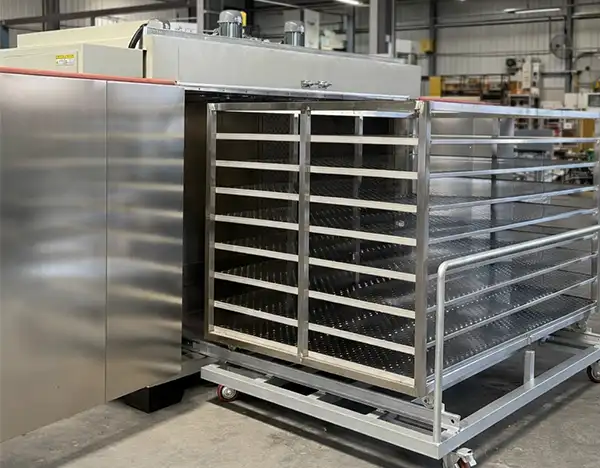
Trolley type curing ovens are well suited for post-curing processes that use wheeled fixtures, racks, or loaded trays. They improve loading convenience and help keep batch handling practical for medium to large production parts.
Best for:Process-specific requirements, custom airflow, exhaust-sensitive systems, and engineered curing layouts
Walk-In Oven
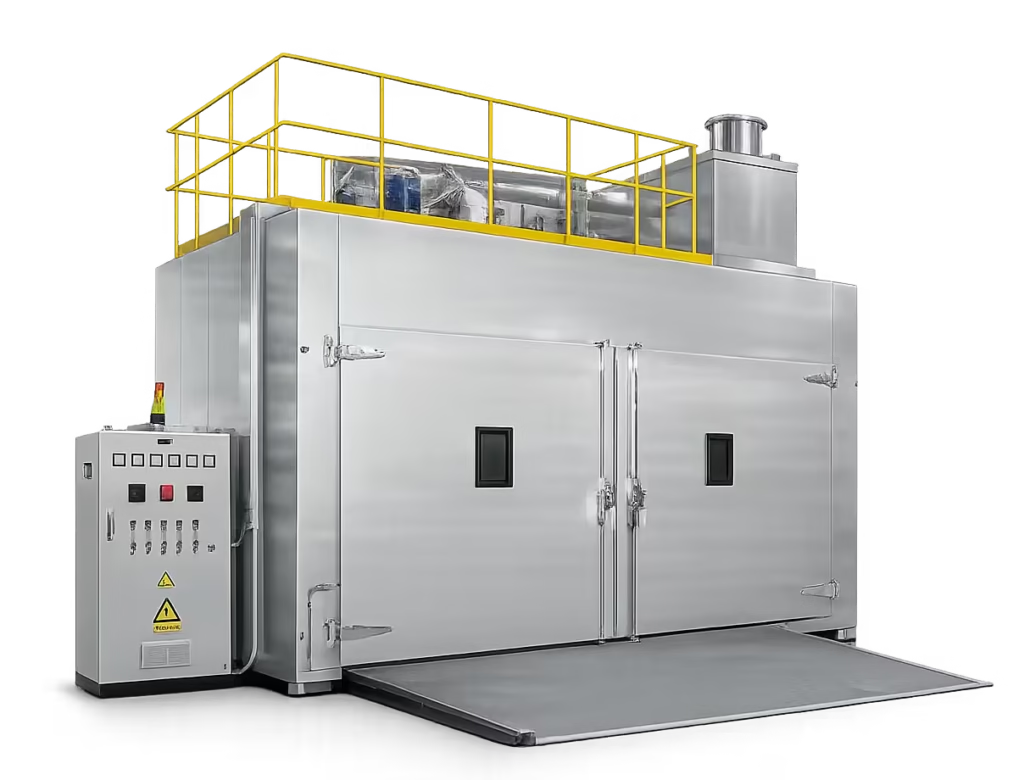
For oversized composite structures, bonded assemblies, or heavy production fixtures, walk-in and large truck-in oven directions offer the chamber space and handling practicality needed for industrial post-curing. These solutions are useful when access, part volume, or loading weight exceeds standard batch formats.
Best for:Small precision parts, varied batches, tray loading, and controlled shelf processing
Industrial Conveyor Oven
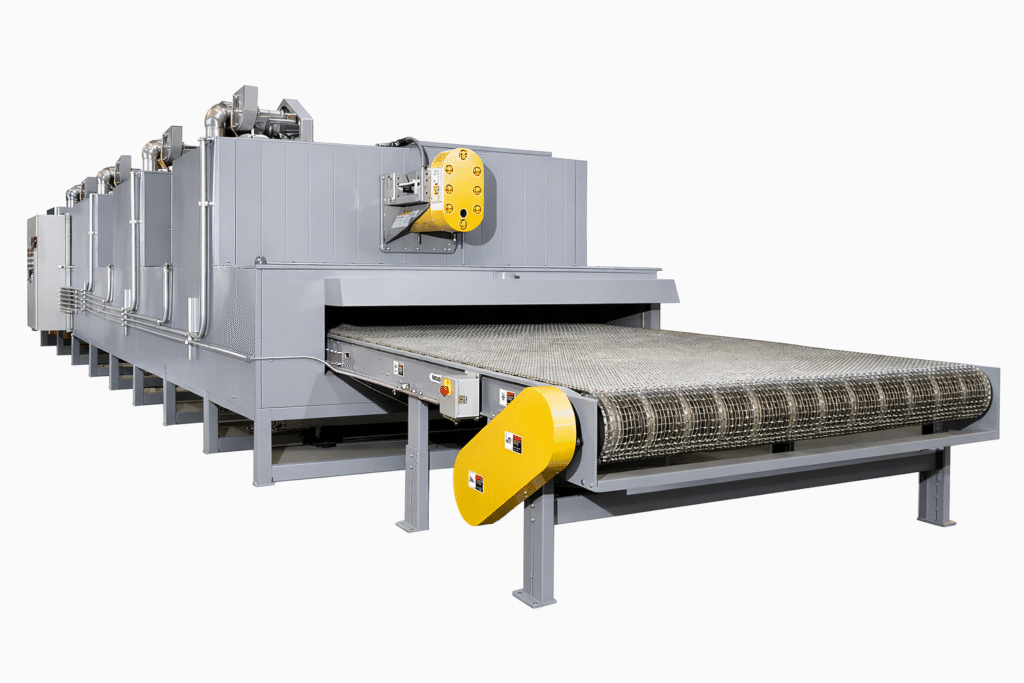
When post-curing must fit a continuous production rhythm, conveyor-based oven solutions can provide repeatable thermal exposure with controlled part movement. Industrial conveyor ovens support general inline post-curing, while infrared conveyor ovens may be considered for specific thin-part or fast-response process conditions.
Best for:Large assemblies, carts, fixtures, and oversized bonded products
Custom Batch Oven
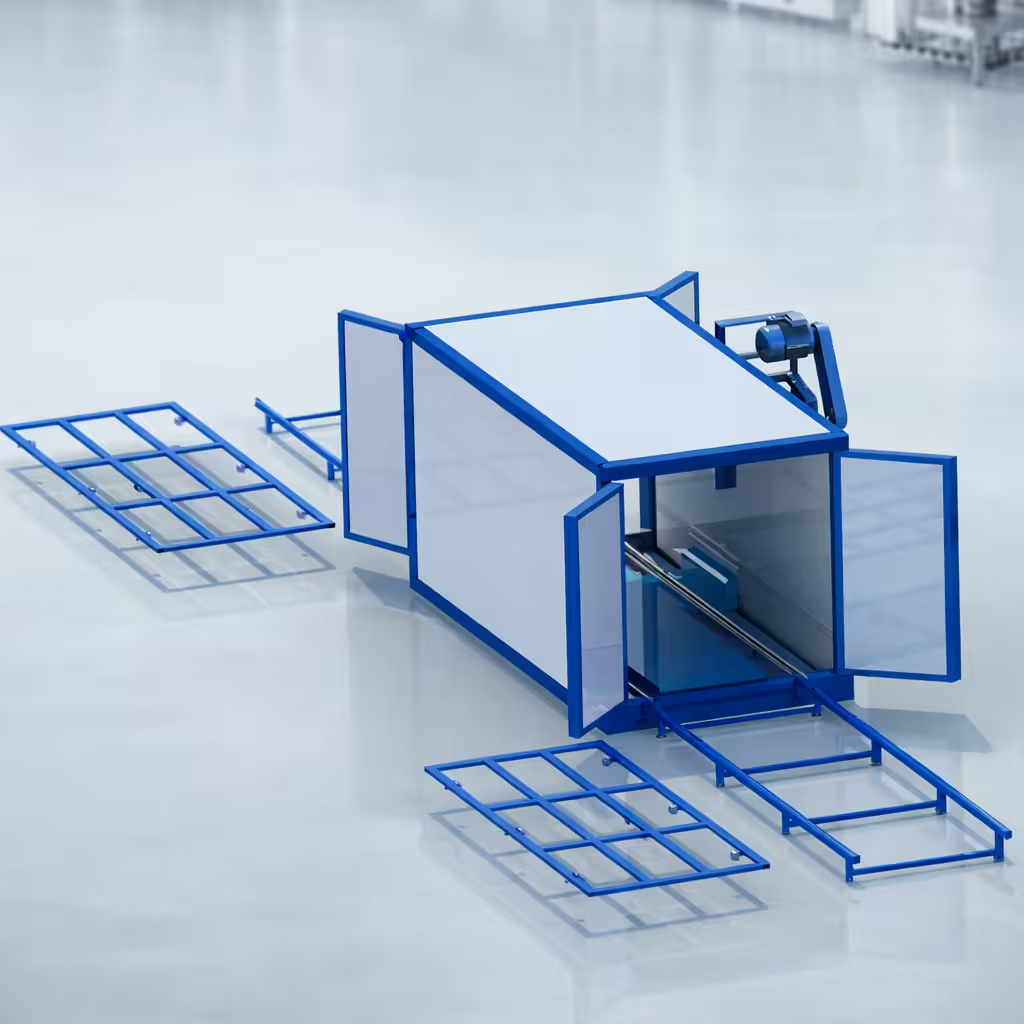
Custom oven solutions are appropriate when part geometry, airflow logic, atmosphere condition, chamber size, or integration requirements go beyond standard oven configurations. For post-curing projects with special process constraints, custom batch or continuous designs may be the most practical direction.
Best for:Process-specific requirements, custom airflow, exhaust-sensitive systems, and engineered curing layouts
Support Before RFQ
Process Validation and Engineering Support
If your process still needs verification, ZonHoo can support testing on available equipment before final equipment selection. This helps reduce uncertainty in process definition, equipment direction, and RFQ planning.
- Process requirement review
- Part size and loading evaluation
- Cycle logic discussion
- Airflow and chamber direction advice
- Temperature uniformity considerations
- Documentation and control recommendations
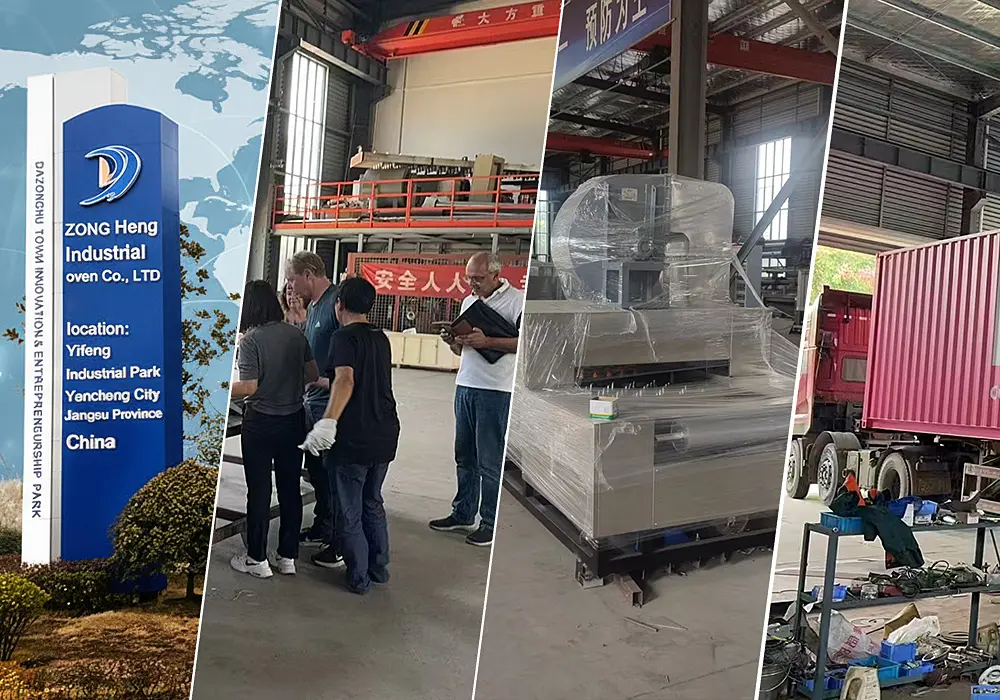
Test Your Process on Available Equipment
Frequently Asked Questions
Frequently Asked Questions About Post-Curing
What is the purpose of post-curing in industrial production?
Post-curing helps materials complete cure development, improve thermal stability, and reach more consistent final mechanical properties after initial curing.
What types of parts usually require post-curing?
Composite components, epoxy resin parts, bonded assemblies, insulation materials, and other performance-oriented polymer systems commonly require post-curing.
How do I choose between a batch oven and a walk-in oven for post-curing?
The choice usually depends on part size, load format, throughput, chamber access, and the level of process consistency required in production.
Why is temperature uniformity important in post-curing?
Poor temperature uniformity can lead to uneven cure development, property variation, and higher risk of distortion or unstable final results.
Can ZonHoo provide custom oven solutions for post-curing?
Yes. ZonHoo can support post-curing applications with custom chamber sizes, loading formats, airflow directions, and control configurations based on process requirements.
Tell Us About Your Post-Curing Process
Share your part type, curing profile, loading method, and production goals. Our engineering team will review your process and recommend a suitable oven direction.
What to Prepare
Part or assembly type, material system, target temperature, cycle time, throughput, loading method, and any curing consistency requirements.
What We Can Discuss
Oven direction, chamber size, airflow concept, control needs, uniformity targets, and documentation support for your production case.