

Large Conveyor Oven
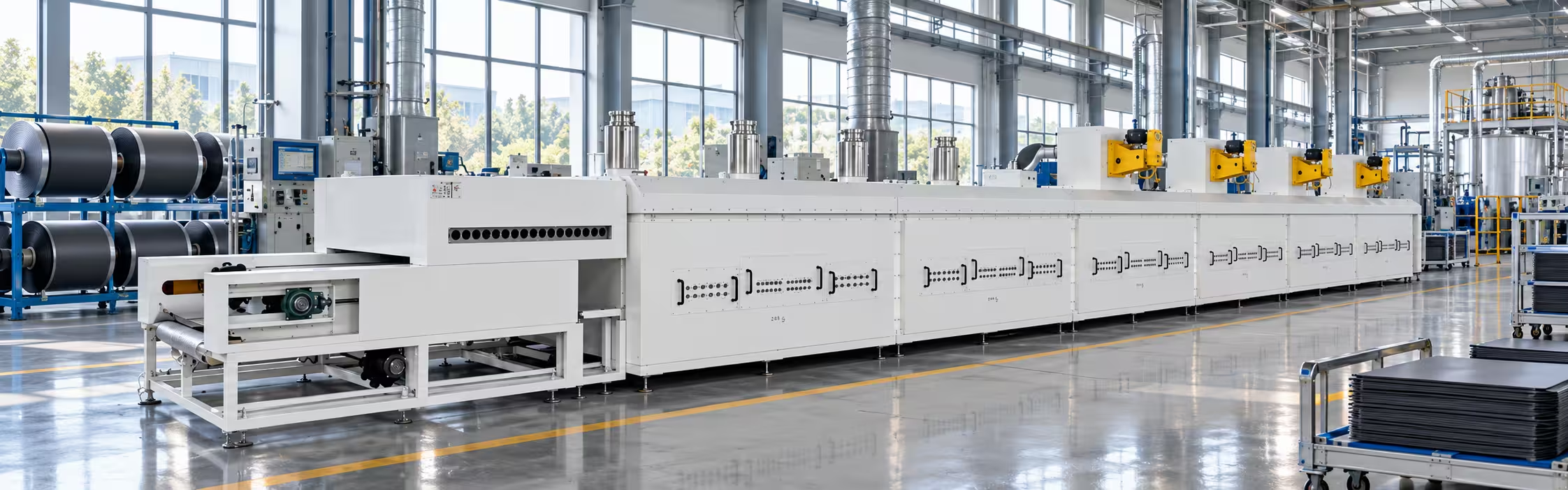
ZonHoo large conveyor ovens are engineered for wide belts, oversized parts and high-load continuous production where chamber width changes the thermal and structural design. Belt support, opening size, edge-to-center airflow, heat loss and frame loading must be solved together—not simply scaled up from a smaller conveyor oven.
Watch a ZonHoo large conveyor oven configured for wide-belt continuous processing of oversized and high-load industrial parts.
What Makes a Conveyor Oven “Large”?
A large conveyor oven is defined by the load envelope and conveying width that force a different thermal and structural solution—not by a single standard dimension. As belt width and opening size grow, airflow distribution, belt support, enclosure stiffness and heat containment become more demanding.
- Wide belts require controlled support and alignment across the loaded width.
- Large openings increase heat-loss potential at the infeed and discharge.
- Wide products make edge-to-center temperature behavior more important.
- Heavier loading increases frame, conveyor and drive-system duty.
- Large modules affect shipping, assembly, access and installation planning.
For Wide Loads — Before the Project Becomes a Fully Custom Architecture
If you are still comparing conveyor families, compare continuous oven configurations. If the project requires unusual transport, non-standard routing or an architecture that goes beyond a large conventional conveyor layout, move into custom conveyor oven engineering.
This page focuses on large conveyor oven, wide belt conveyor oven and large part continuous oven projects where width, product envelope and structural / thermal scale are the defining purchase drivers.
Four Scaling Problems That Must Be Solved on Wide Conveyor Ovens
A successful large conveyor oven is not a standard model stretched wider. Each added width changes airflow resistance, structural load, opening losses and product-support requirements.
Wide-belt support
Rollers, rails, belt tension and support spacing must keep the conveying surface stable under real production loading.
Edge-to-center uniformity
Supply and return airflow must be balanced so wide loads do not experience systematic center / edge thermal differences.
Large opening heat loss
Infeed and discharge openings grow with the product envelope, increasing uncontrolled heat escape and profile disturbance.
Structural load
Chamber panels, frames, conveyor supports and drive components must handle greater dead load and operating load without distortion.
Wide Products Make Temperature Uniformity a First-Class Design Requirement
The wider the load, the more useful it becomes to evaluate edge, center and return-air behavior instead of relying on a single chamber temperature reading.
What We Review Across a Wide Conveyor
Uniformity Should Be Verified Across the Working Envelope
For a deeper engineering treatment, use the conveyor oven temperature uniformity guide.
- Do not judge a wide oven from one sensor location.
- Test with realistic loading or a defined acceptance condition.
- Check both across-belt and through-process variation.
- Document the measurement method before FAT acceptance.
Size the Oven from Product Envelope, Loading Pattern and Throughput
Large conveyor oven quotations should begin with the true loaded envelope. Product dimensions alone are not enough if several parts are arranged across the belt or carried on fixtures.
| Engineering input | What to define | Why it matters |
|---|---|---|
| Maximum product envelope | Length, width, height and any fixture / carrier dimensions | Sets the minimum clear opening and chamber envelope. |
| Across-belt loading pattern | Number of parts per row, gaps and usable edge clearance | Defines practical belt width and airflow blockage. |
| Load per meter | Combined product, fixture and conveyor loading | Influences support structure, shaft, bearing and drive design. |
| Thermal requirement | Target temperature, heat-up time, soak / cure / dry time | Determines residence time and heated length. |
| Plant constraints | Available footprint, door access, crane access and installation route | Determines module size, shipping split and site assembly strategy. |
For general specification logic, use the industrial conveyor oven selection guide. For width, product arrangement and heated-length planning, use the conveyor oven sizing guide.
Where Large Conveyor Ovens Make Sense
The strongest applications are processes where part size, multi-part loading or heavy fixtures make normal conveyor width impractical.
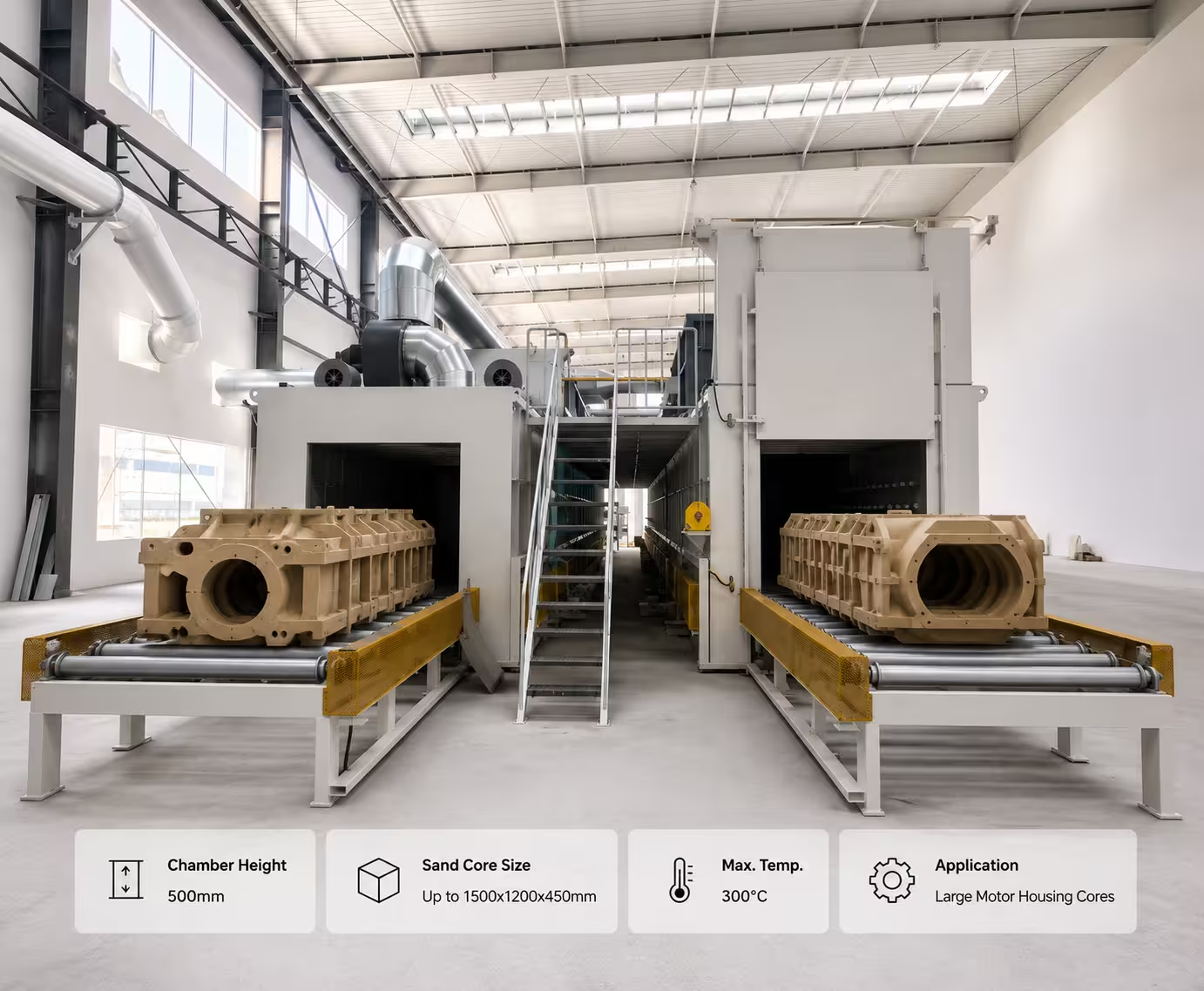
Large Foundry Components
Castings, molds, fixtures and wide loading arrangements can require greater belt width and heavier structural support.
industrial ovens for foundry production →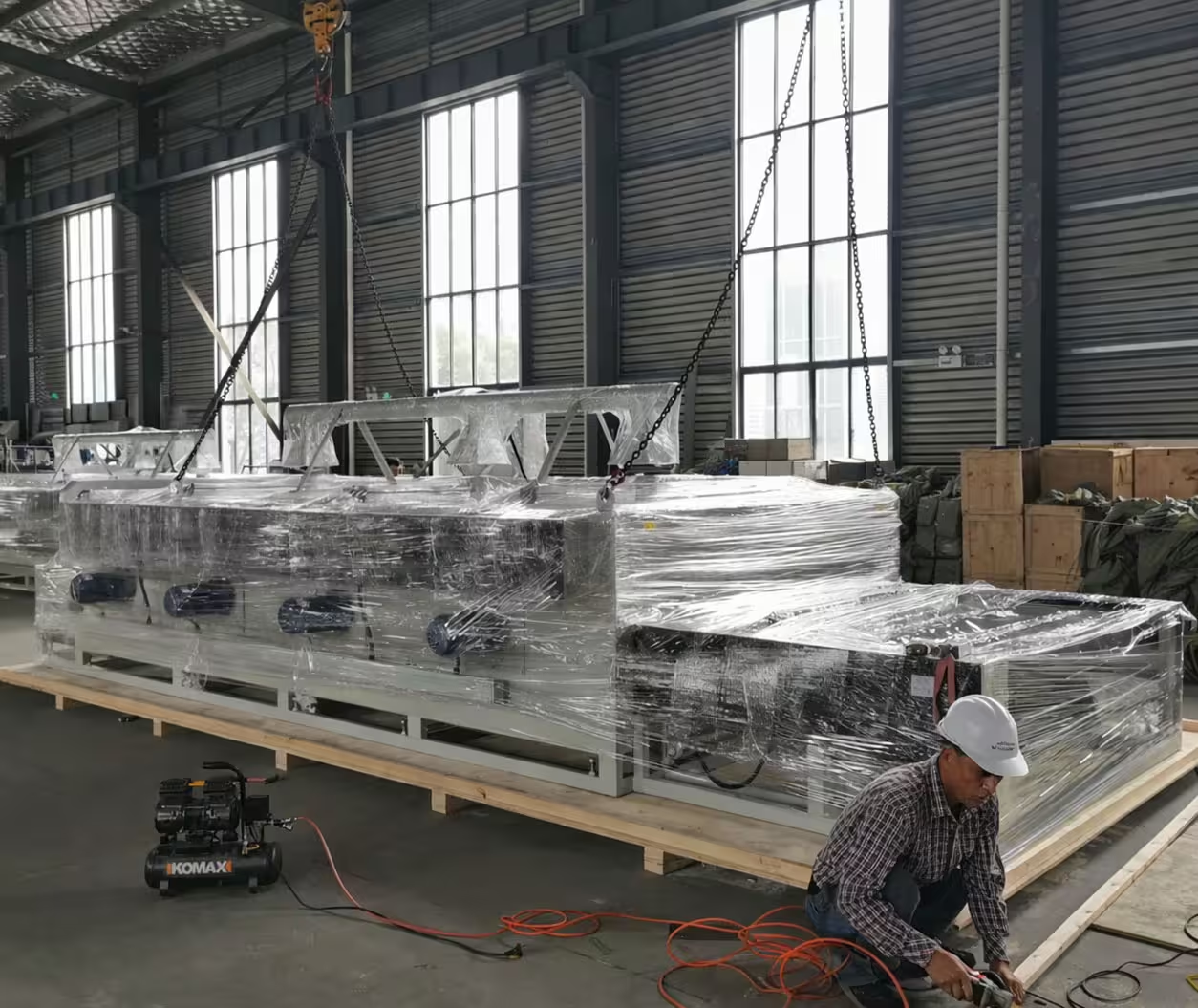
Panels & Fabricated Assemblies
Wide or tall fabricated products can require a larger clear opening, broader heat coverage and controlled loading clearances.
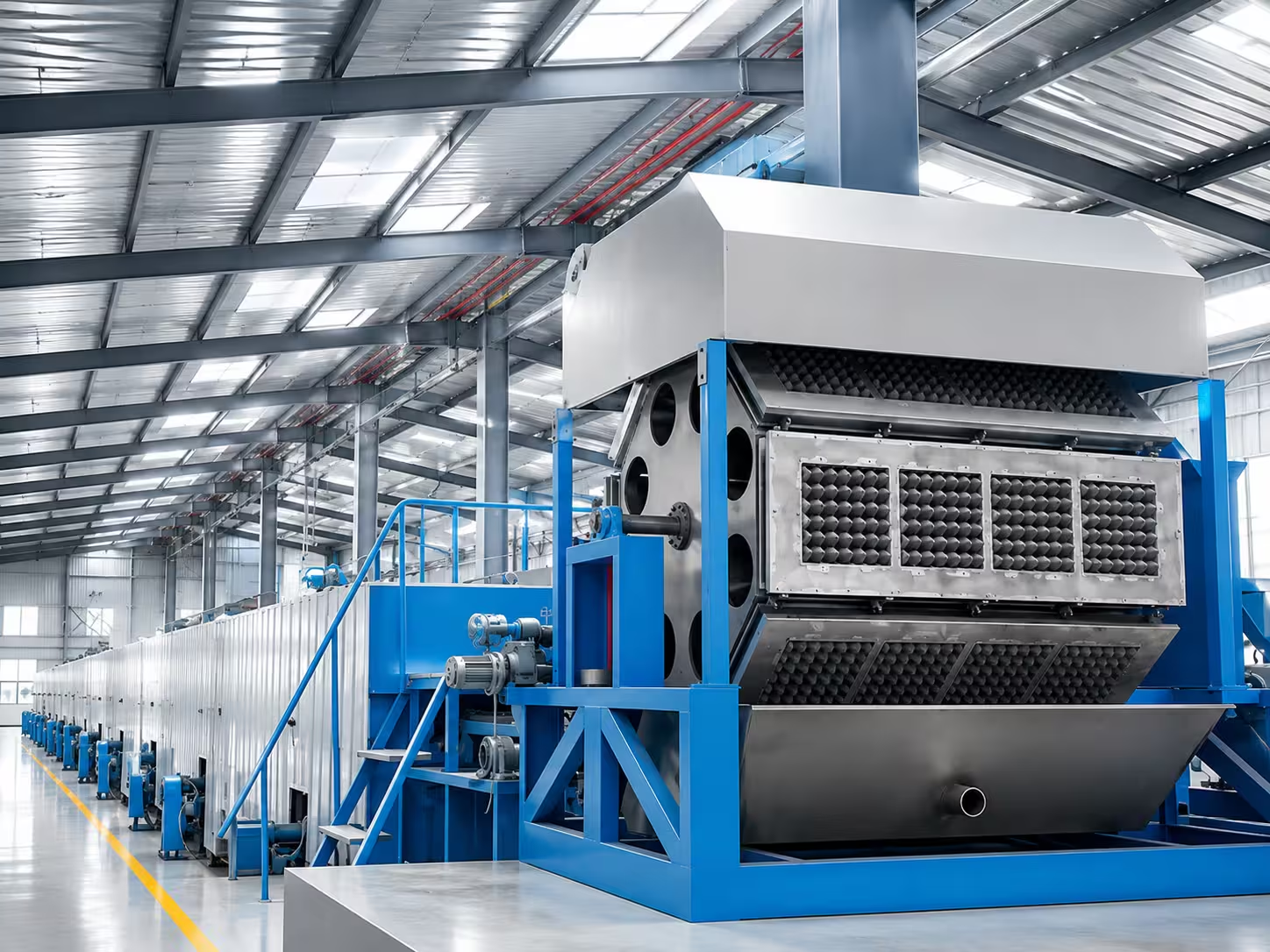
Multi-Part Wide-Belt Loading
A wider belt can increase throughput by carrying several parts across the conveyor, but only when airflow and loading are engineered together.
Large Ovens Change More Than the Fabricated Chamber Cost
Wide conveyors affect steel structure, drives, heaters, fans, insulation, transport, installation and site handling. Procurement should compare the complete installed scope.
Cost Drivers
Understand how size, belt width, load, thermal duty, controls and installation influence project cost without relying on unrealistic standard pricing.
conveyor oven cost guide →Oven System Planning
Coordinate footprint, line interfaces, access, utility routing and process capacity before finalizing the large oven footprint.
industrial oven system planning →Delivery & Engineering Support
Large ovens often require modular shipment, site assembly, lifting plans and commissioning coordination.
installation and engineering support →Large Continuous Ovens Need Manufacturing Capacity to Match the Design
Wide modules, heavy frames and large fabricated assemblies require more than thermal calculations. Fabrication, assembly, testing and shipment planning all influence whether the final system can be built and installed as designed.
Large-Format Fabrication & Assembly
Review ZonHoo’s manufacturing scope for custom industrial ovens, including structural fabrication, insulated modules, controls and production-line integration.
ZonHoo manufacturing capabilities →When “Large” Becomes “Custom”
If the conveyor route, loading method, process zones or installation constraints move beyond a conventional wide-belt architecture, the project should be treated as a custom continuous system rather than simply a larger standard oven.
custom conveyor oven engineering →Large Conveyor Oven Questions
How wide can a large conveyor oven be?
There is no single standard width. Practical width depends on product arrangement, belt support, structural span, airflow distribution, available plant space and shipping / installation constraints.
Why is temperature uniformity harder on a wide conveyor oven?
As width increases, air distribution, product blockage and return-air balance become more difficult to keep consistent from one edge of the belt to the other. The acceptance method should therefore consider the working width, not only a center sensor.
Does a larger oven always need a larger burner or heater?
Heating capacity depends on process load, required temperature rise, product mass, heat losses, openings, exhaust and throughput. Physical size alone is not enough to determine heater capacity.
How are large conveyor ovens shipped?
Large systems are commonly divided into modules sized around transport and site access limits. The exact split should be planned together with field assembly, lifting and commissioning requirements.
When should I move from a large conveyor oven to a fully custom continuous oven?
Move into custom continuous engineering when the project needs unusual product transport, special routing, complex multiple processes, non-standard loading or installation constraints that cannot be solved by scaling a conventional conveyor layout.